Kinesio Taping in San Antonio
The brace helped, and it also let the muscle stop working. You want something that keeps the joint honest without taking the job away from you.
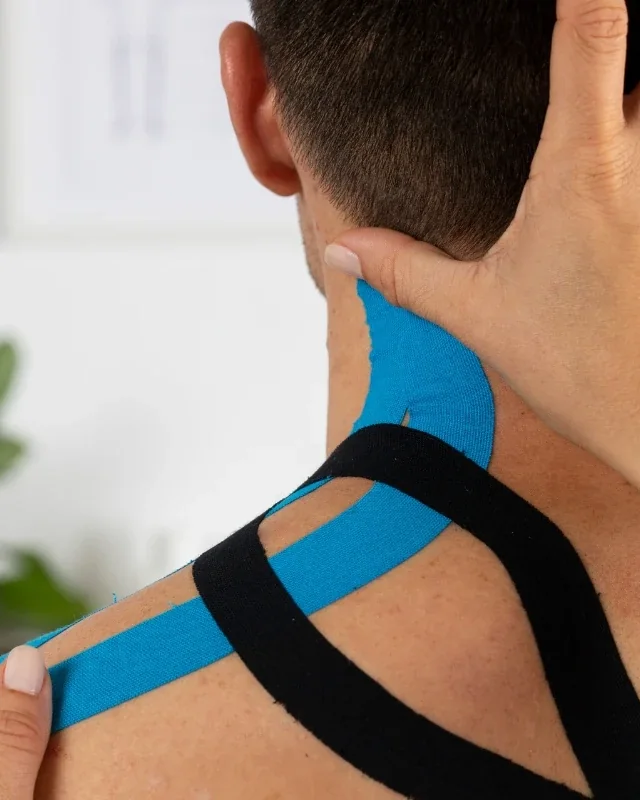
What Is Kinesio Taping?
Kinesio taping uses a thin elastic tape applied directly to the skin, and its whole character comes from the fact that it stretches. Rigid athletic tape works by stopping movement. Elastic tape does the opposite: it moves with you, so a joint can be supported through its full range rather than locked out of it. As the tape recoils it lifts the skin very slightly, which decompresses the layer just underneath and gives fluid somewhere to travel, and that is why it is used on swelling. It also does something quieter but arguably more useful. Skin is dense with sensory receptors, and tape gives them a constant, low level signal about where a joint is and what it is doing. That input can take the edge off pain and it can cue a movement pattern: a strip across the shoulder blades that you feel the moment you round forward is doing more coaching than restricting. How the tape is cut, how much stretch is applied and the direction it is laid all change the effect, which is why the same roll of tape can be used to settle swelling on one patient and cue posture on the next.
What taping is not is a treatment on its own. It is an adjunct, and it works because it keeps doing something between visits. You are in the clinic 2 to 3 times a week at most, and the tape stays on for the days in between, so the cue and the support carry through the hours that actually make up your week. Sessions run 30 to 60 minutes with the same therapist, and Texas direct access lets you begin up to 30 days of physical therapy without a physician referral.
Who it's for.
Taping earns its keep when you need support or a reminder outside the clinic, and when a brace would take away work the muscle needs to be doing.
Swelling after an injury or an operation
An ankle you rolled, a knee after surgery, a hand that puffs up by the end of the day. The swelling itself is now the thing limiting your range, and elevating it only helps while you are sitting still. A fan pattern of tape lifts the skin over the area and gives fluid a direction to drain, and it keeps working while you walk around. The aim is a joint that bends further tomorrow than it did today.
Shoulders and posture that collapse by the afternoon
You know what good position feels like, you just cannot hold it once the workday takes your attention. Tape across the mid back gives you a light tug the moment you round forward, so the correction happens without you having to remember it. Combined with the strengthening you do in the clinic, the aim is that the position gradually stops needing the reminder at all.
Getting back to sport or a physical job
You are cleared, mostly confident, and still bracing slightly against the movement that hurt. A brace would settle that and would also let the muscle stay quiet, which is the last thing you need now. Elastic tape gives support and joint awareness through a full range instead of blocking it. The aim is a full shift or a full session where you stop thinking about the injured side.
What to expect in a session.
Taping takes only a few minutes of a visit, but the decisions behind it are made before the roll comes out. Here is how it goes on.
Work out what the tape is for
Your therapist watches the movement that bothers you and identifies the specific job the tape needs to do: drain a swollen area, unload an irritated tendon, or cue a position you keep losing. That decision sets the cut, the direction and how much stretch goes into the strip, so the same tape can do very different things.
Application
The skin is cleaned and dried, and hair may need trimming so the adhesive holds. The tape is anchored with no tension at one end, then laid along the target with the joint held in a specific position. You should feel a light pull, never a pinch. Your therapist rubs the strip to activate the adhesive and then rechecks the movement with you.
Wear it, then report back
The tape stays on for several days and survives showers, so you carry the support and the cue through your ordinary week. At your next visit you tell your therapist what changed and what did not, and the pattern gets adjusted, moved or dropped as your strength and range improve.
Pat the tape dry after a shower rather than rubbing it, and do not use a hair dryer on it. Some itching in the first hour is common as the adhesive settles. Remove it and let us know if you get burning, a rash, spreading redness or persistent itching, and take it off slowly in the direction of hair growth rather than pulling it straight up. Tell your therapist beforehand about any adhesive allergy, fragile or sensitive skin, or a rash or open wound near the area, and a small test patch can be applied first.
Excellent and knowledgeable staff! Great experience and I'd recommend this place to anyone
Where to go next.
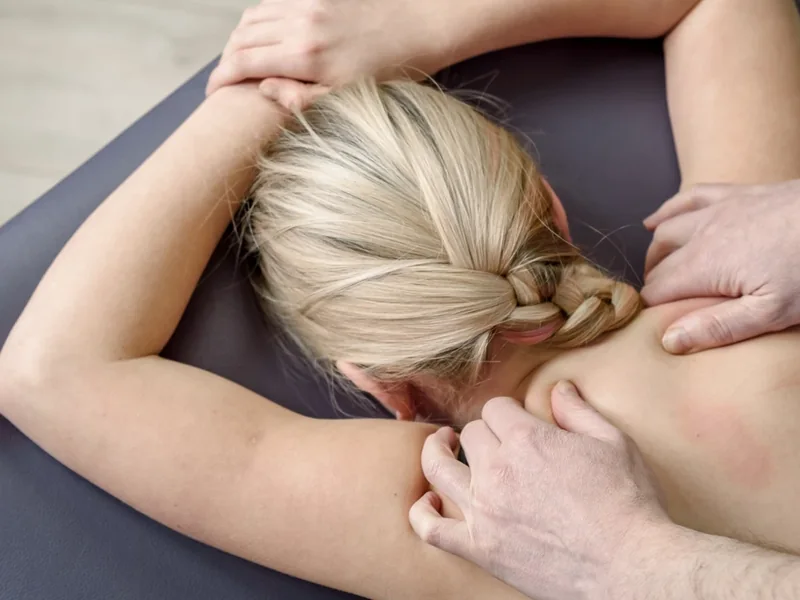
Manual Therapy
The hands-on work that restores the range first. Tape is usually applied at the end of it to hold what you gained.
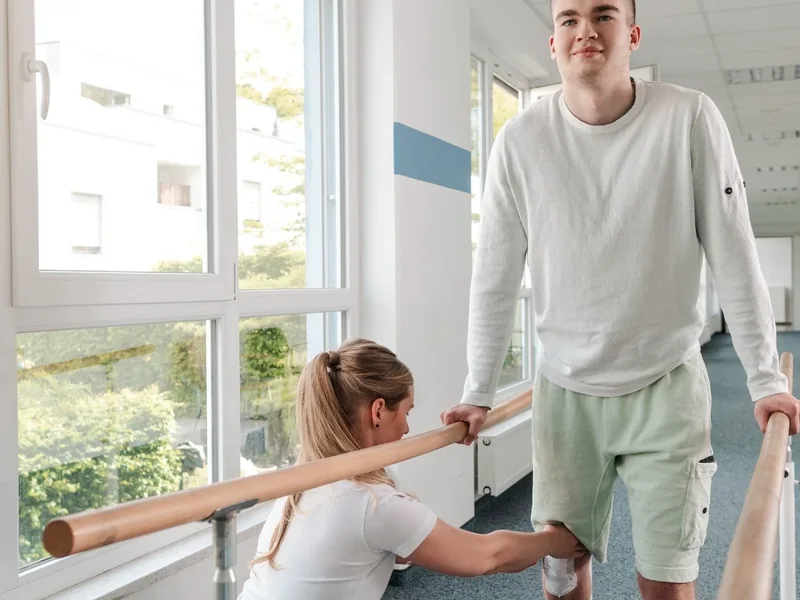
Sports Rehab
Return to play programmes built around your sport and your timeline, where taping supports the last stretch back.
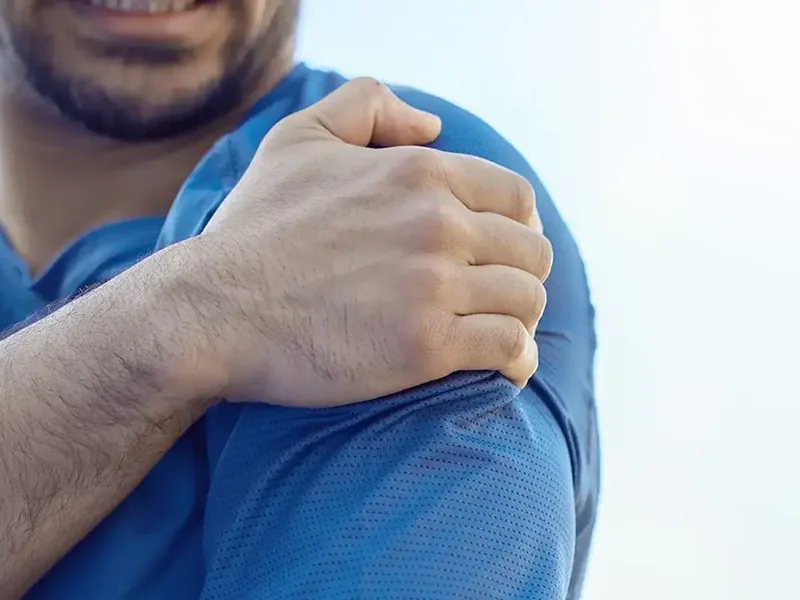
Shoulder Pain
One of the areas taping is asked about most, whether for posture cueing or unloading an irritated tendon.