Balance Therapy in San Antonio
You have started using the handrail, taking the long flat route, and telling yourself you just caught your foot. Balance therapy trains the systems that keep you upright, before a stumble becomes a fall.
What Is Balance Therapy?
Balance therapy trains your ability to stay upright and to walk with control. Staying upright is never one system working alone. It is the balance organ in your inner ear, your vision, and the position sensors in your feet, ankles, knees and hips, all coordinated by the brain and backed by the strength to correct yourself the moment something slips. Unsteadiness appears when one of those inputs weakens or when the muscles that are supposed to catch you have gone quiet. That is why the fix is rarely just standing on one leg and hoping. Your therapist tests each contributor separately, finds which ones are underperforming, and trains those specifically alongside the hip and ankle strength every recovery step depends on. Gait is treated the same way, because how you walk and how steady you feel are the same problem viewed from different angles.
Balance therapy and vestibular therapy are related but not interchangeable. Balance therapy is for unsteadiness, changes in the way you walk, and the fall risk that comes with them. Vestibular therapy is for dizziness and vertigo coming from the inner ear or the central pathways, where the room itself appears to move. If your main complaint is spinning, start there. If your main complaint is feeling like you might go over, start here. Your therapist confirms which at the evaluation, and many people are treated for both. Unsteadiness becomes more common as we age, but it is not something you simply have to accept.
Who it's for.
Balance therapy is for anyone whose footing has become something they think about. It is worth an evaluation well before a fall happens, and it is worth one straight after a near miss.
Unsteadiness that has changed how you move
You take the stairs one at a time, reach for furniture crossing a room, and avoid uneven ground and dim light. Those adjustments work, which is exactly why they hide how much steadiness has actually been lost. Your therapist measures your balance under the conditions that matter, standing, turning, reaching and walking while doing something else, then trains the specific system that failed rather than balance in general. What you get back is crossing a room without planning the route.
A recent fall, a near miss, or fear of falling
You went down, or almost did, and it has quietly rearranged what you are willing to do. Fear of falling changes the way people walk. Steps shorten, the body stiffens, and reactions slow, all of which raise risk rather than lower it. Your therapist trains the reactive stepping and the hip and ankle strength that catch you when balance is genuinely lost, reviews the hazards in your home, and rebuilds confidence with graded challenge. What you get back is a life that stops shrinking.
Gait changes after surgery, illness or diagnosis
A joint replacement, a long hospital stay, arthritis, a stroke or Parkinson's disease changed the way you walk, and the limp or the shuffle has outlived the reason for it. A gait pattern learned during pain or weakness tends to stay put after both have gone. Your therapist analyzes the walk, identifies what is being avoided and where the strength gap sits, then retrains the pattern step by step. What you get back is a walk that costs you less.
What to expect in a session.
Balance work has to feel genuinely challenging to change anything, so sessions are set up to let your therapist push you to the edge of your ability safely.
Evaluation of balance, gait and strength
Your therapist tests standing balance with your eyes open and closed and on different surfaces, watches you walk, turn, step over obstacles and rise from a chair, then measures hip and ankle strength. Your medications, your vision, your footwear and your home layout are part of this too. You leave knowing which system is letting you down and what training that calls for.
Training the system that is actually failing
If your vision has been quietly compensating for a weak inner ear signal, work is done with eyes closed or in altered light. If the ankles are weak, they get strengthened and challenged directly. Sessions build from stable ground to foam, from static holds to reaching, turning and doing two things at once, always with support close at hand and the level set by what you managed last visit.
Gait, real world practice and a home program
The last piece is transferring it out of the clinic: walking at different speeds, on slopes and stairs, carrying something, turning quickly, and recovering when you are nudged off balance. Your therapist gives you a home program that is safe to do on your own, with clear guidance on footwear, lighting and the hazards worth removing.
Wear the shoes you actually walk in, not your newest pair, and bring your cane or walker if you use one. A current list of your medications helps, since some combinations affect steadiness. If a family member is worried about your falls, they are welcome to come and watch the testing.
A big endorsement for any health program is when doctors like and respect it enough to send referrals. My two spine docs and my primary doc are big promoters of Liberty!
Where to go next.
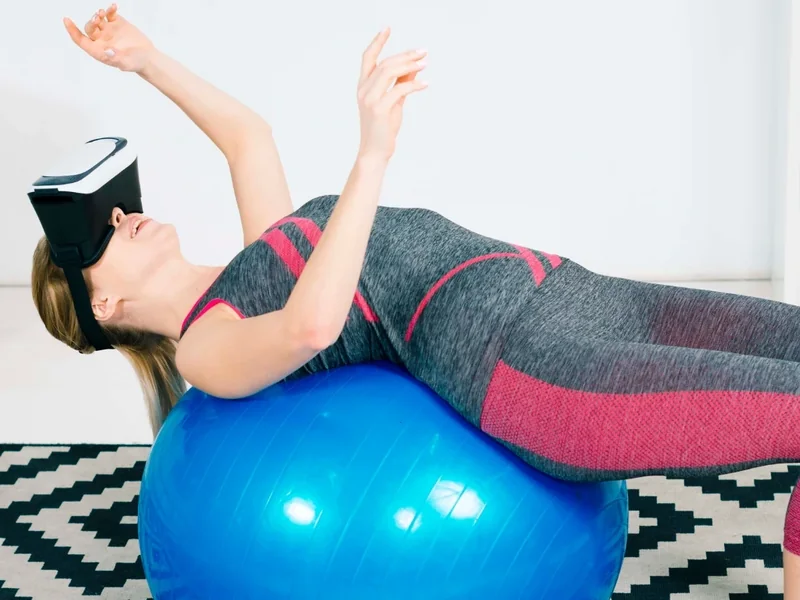
Vestibular Therapy
For dizziness and vertigo coming from the inner ear or the central pathways, where the room itself appears to move.
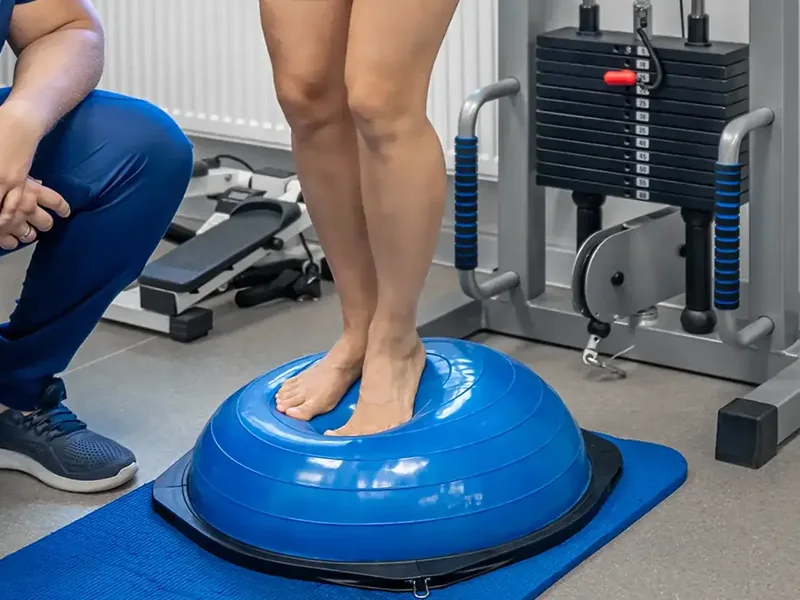
Balance & Gait Disorders
The condition page: what drives unsteadiness and an altered walk, and how each cause gets treated.

Back Pain & Sciatica
Back pain and leg symptoms change how you stand and load your legs, and they show up quickly in balance testing.