Balance & Gait Disorder Therapy in San Antonio
You have started scanning the floor ahead of you, taking the handrail with both hands, and quietly dropping the outings that used to be nothing. Fear of falling is not caution. It is a symptom, and it responds to treatment.
What causes balance and gait disorders?
Standing upright is not passive. Your inner ear reports where your head is, your eyes report where the room is, and the nerves in your feet and joints report where your body is. Your brain compares those reports and corrects you constantly, without ever asking permission. When one input is degraded, or the muscles that carry out the correction have weakened, you feel it as unsteadiness. The useful question is which part has slipped, because each one is treated differently.
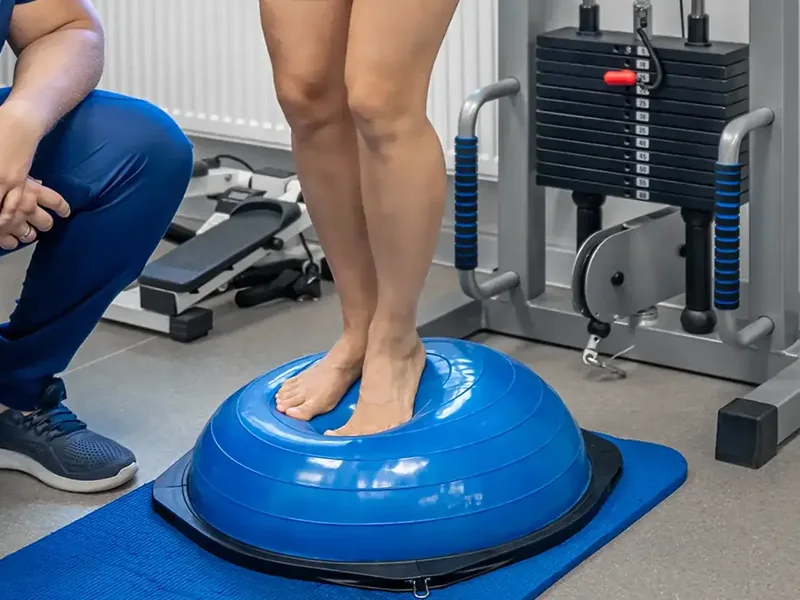
Your inner ear reports every head movement and tells your brain which way is up. When that system is damaged by infection, injury, or age, the reports arrive distorted, and the world feels unstable when you turn, bend, or look up at a shelf. Some people describe spinning. Many just describe a fog and a sense that the floor is not quite reliable. The vestibular system can be retrained, but it needs the right challenge in the right order to compensate well rather than badly.
Balance corrections are carried out by muscle. When you get pushed off centre, your ankles, quadriceps, and glutes have to fire hard and fast enough to catch you. Strength fades quietly with age and inactivity, and the speed of that response fades faster than the strength does. That is why a stumble that used to be nothing now finishes on the floor. Rebuilding leg and hip strength, and specifically the ability to produce force quickly, is the most direct route back to steady.
The nerves in your feet and ankles constantly tell your brain where the ground is and how your weight is distributed on it. Diabetes, chemotherapy, spinal changes, and age can dull that signal. With the feet reporting less, you lean harder on your eyes, which is why a dark hallway, uneven ground, or a patterned floor becomes so difficult. Sensation may not return, but ankle strength, deliberate foot placement, and practice on varied surfaces rebuild the control the nerves no longer provide.
Stroke, Parkinson's disease, multiple sclerosis, and traumatic brain injury all interrupt the pathways that plan and correct movement. The result can be weakness on one side, shuffled or shortened steps, freezing mid stride, slowed reactions, or the widened stance your body adopted to feel safer. Progress here comes from repetition at the right difficulty, practised often. Neurological rehabilitation is a long game played in specific, measurable steps, and gains in walking and confidence are realistic goals at every stage.
One fall changes behaviour immediately. You move less, you brace more, you drop the activities that were keeping your legs strong, and within months you are genuinely less stable than you were, which makes the next fall more likely. This cycle is the most common reason people arrive here, and it is not a failure of nerve. Breaking it means rebuilding strength while gradually re-entering the situations you have been avoiding, with someone beside you while you do it.
Some medications list dizziness and unsteadiness among their effects, and several taken together can compound it. Vision matters just as much: new glasses, bifocals on a staircase, and cataracts all change what your brain has to work with. So does the house, with its loose rugs, cords, dim hallways, and the unlit step down to the garage. We review what is contributing, coordinate with your physician when medication is involved, and train the systems that can still be improved.
How physical therapy in San Antonio helps.
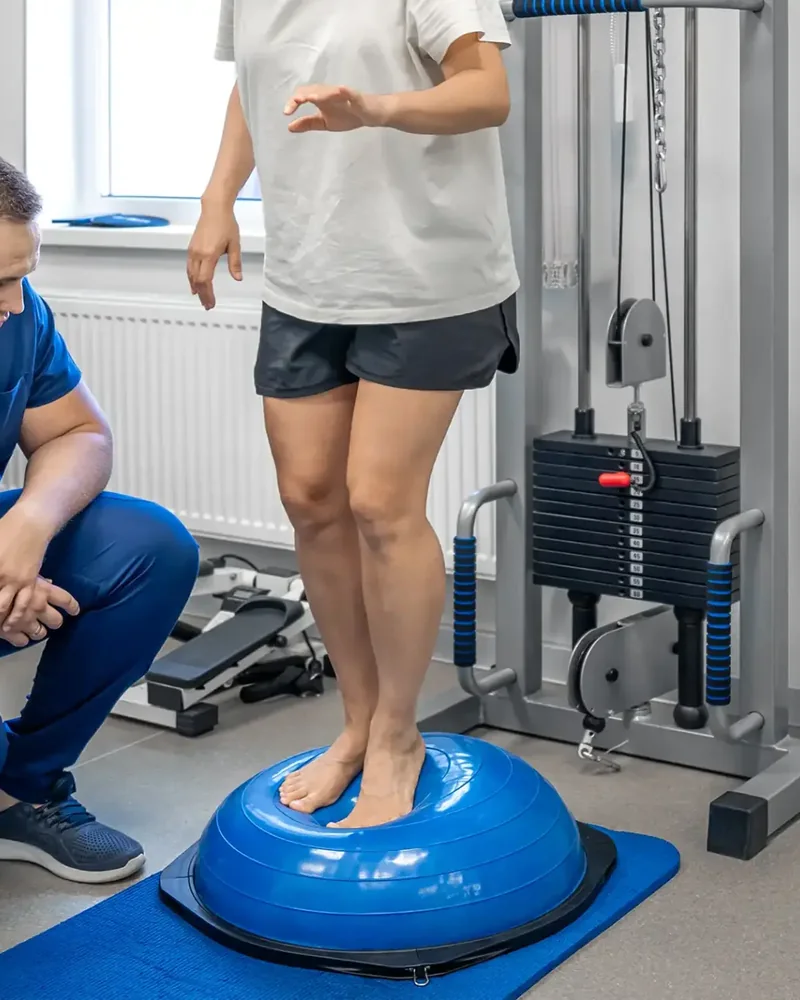
Balance is a skill, and skills respond to practice. Your evaluation identifies which system is underperforming, and treatment targets that one instead of handing everybody the same sheet of exercises. Pain, where any joint pain or stiffness limiting how you walk gets addressed first. Prime, where ankle motion, foot placement, and posture get corrected so the corrections have something to work with. Perform, where balance gets challenged on purpose: softer surfaces, a narrower base, turning your head while walking, stepping over obstacles, changing direction, and recovering from a nudge. Prevent, where the home programme and the home itself get sorted so the gains hold. Early sessions happen with support within reach, so you can be pushed without being at risk. In Texas you can begin without a physician referral for up to 30 days, and we verify your benefits before the first visit.
What to expect from your recovery.
Testing what is actually failing
We measure how you walk, how you react to being taken off balance, leg strength, ankle motion, sensation in your feet, and vestibular function. We review your medications and any walking aid you use. That baseline shows where the risk is sitting and gives us something concrete to measure against as you progress.
Challenging your balance safely
Treatment challenges the system that tested poorly, at a level where you can succeed but still have to work for it. Support stays within reach early and comes away as you improve. Most people notice a change within the first two to three weeks, often first in how confidently they turn around or manage a staircase.
Confidence back in real settings
The final phase moves the work into the situations you have been avoiding: uneven ground, curbs, crowded aisles, carrying something while walking. A typical course is two to three visits a week for four to six weeks. You leave with a home programme and a clear plan for holding onto the strength you rebuilt.
I am very pleased with the results of my rehabilitation at Liberty, I walked in barely able to hold my camera equipment without pain, and now I am without the pain.
Pain rarely travels alone.

Dizziness & Vertigo
Spinning sensations and vestibular dysfunction go hand in hand with balance loss. We address the root cause.
Arthritis
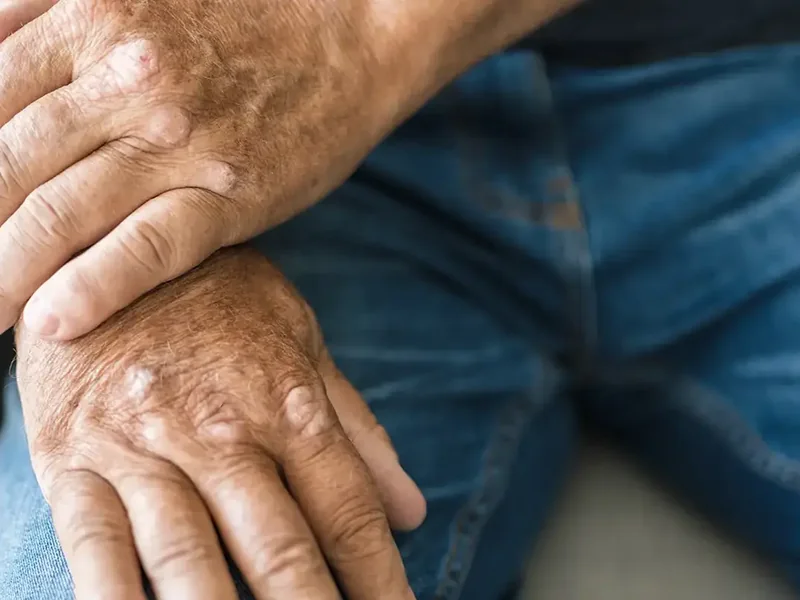
Balance loss often comes with compensatory pain. We treat both.
Parkinson’s
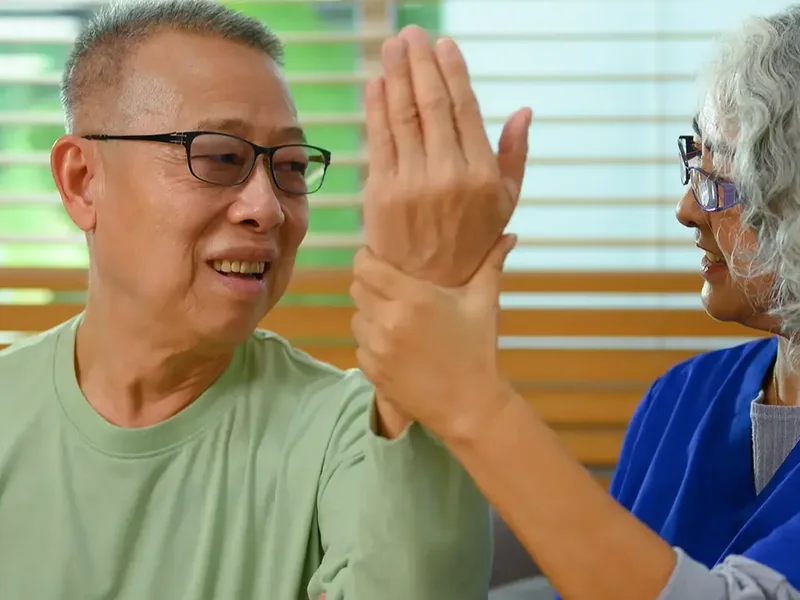
Movement is medicine here. Bigger, faster, more deliberate, practised until it holds.