Manual Therapy in San Antonio
You stretch it every morning and it is stiff again by lunchtime. You have been disciplined about this for months. The problem is not your effort, it is that some restrictions do not respond to anything you can do to yourself.
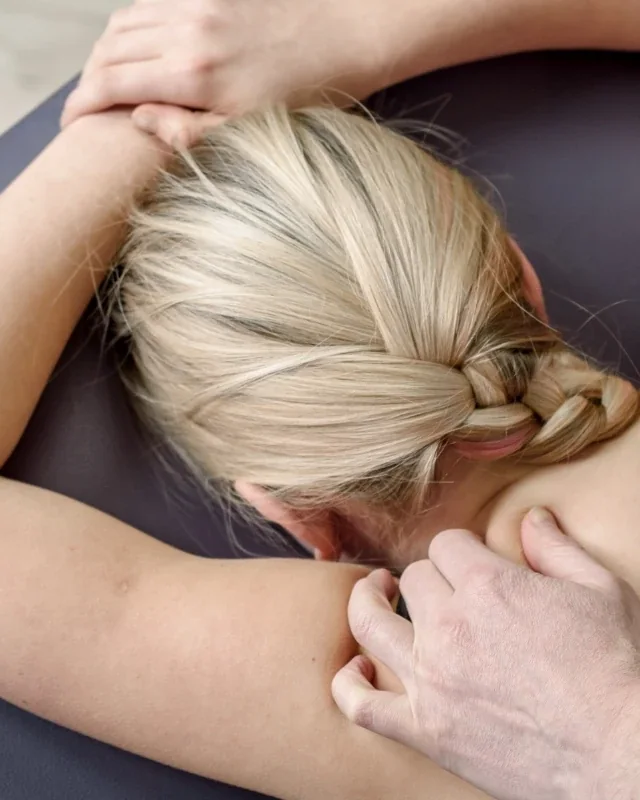
What Is Manual Therapy?
Manual therapy is skilled, hands-on treatment in which a trained therapist moves your joints and soft tissue in ways you cannot move them yourself. It covers several distinct techniques, each chosen for a reason. Joint mobilization restores the small gliding motion a stiff joint has lost. Myofascial release works on the connective tissue and scar that binds a muscle to what surrounds it. Soft tissue mobilization loosens the muscle itself and brings circulation back to it. Manual traction takes pressure off a compressed joint or an irritated nerve root. Neuromuscular re-education then teaches the body to use the movement it has just been given, so it does not simply tighten back down on the drive home. It is not a massage. Massage is aimed at relaxation, and it is genuinely good at that. Manual therapy is a clinical intervention aimed at a specific mechanical restriction that has been identified by examination.
The difference is in the hands. A therapist palpating your spine or your shoulder is reading how the tissue responds under load, and adjusting grade, direction and force in real time, which is why the treatment fits where your body actually is that day instead of where a plan assumed it should be. Two of our therapists carry the FAAOMPT credential in orthopedic manual physical therapy: Dr. Mary Lou Lugo, DPT, FAAOMPT, CF-L1, Cert. DN, and Dr. Kirsten Harper, DPT, OCS, FAAOMPT. In Texas you can start with us without a physician referral for up to 30 days of treatment. Visits run 30 to 60 minutes, one on one, with the same therapist each time, and a typical course of care is 2 to 3 visits a week for 4 to 6 weeks.
Who It's For
Manual therapy is for people whose movement is being held back by something mechanical: a joint that will not glide, tissue that will not lengthen, a nerve with no room. If you are stiff, stuck or sore in one identifiable place, it is worth an evaluation.
A joint that has lost its range
The shoulder stops halfway to overhead. The neck turns one way and not the other, so you twist your whole body to reverse the car. The hip will not let you cross your legs to put a sock on. This is usually a capsule that has tightened, and a capsule does not respond to a stretch because you cannot reach it yourself. Graded joint mobilization restores the glide, and range often comes back inside the same visit. The outcome is a joint that goes where you send it.
Muscle and tissue that will not let go
You have been faithful about stretching for months and the calf, the hip flexor or the band down your thigh is exactly as tight as it was. Guarded muscle and thickened fascia resist a passive stretch by design, and effort alone will not change that. Soft tissue work and myofascial release change the tissue directly, then loaded movement locks in the length you just gained. The outcome is a body that is not fighting you the whole way through a workout or a workday.
Nerve pain and post-surgical stiffness
Sciatic pain down the leg, tingling into the hand, or a joint that has seized up around a surgical scar and a body that has learned to protect it. Manual traction takes pressure off the compressed structure, and careful scar and soft tissue work restores glide where things have adhered. Just as important, it teaches a guarded nervous system that this movement is safe again. The outcome is a recovery that starts moving after weeks of feeling stalled.
What to Expect
Assessment, then hands-on work, then movement that keeps it. You should notice the difference in the room, before you leave.
Find the restriction and prove it
Your therapist asks what you cannot do, then measures it: how far the joint travels, in which direction it stops, and what your tissue feels like at the end of that range. Those measurements are the baseline we will retest later. Before a hand goes anywhere, you will hear what is restricted, why it matters to your symptoms, and what we are going to do about it.
Graded hands-on treatment
The chosen technique is applied at a grade your tissue tolerates: mobilization into the stiff direction, soft tissue work along the muscle, traction to decompress, or a combination. It should feel firm and specific, sometimes tender, but never something you have to brace through. Your therapist checks in throughout and adjusts force and angle based on how the tissue is responding.
Use it, then keep it
New range is temporary until you load it, so the moment the joint moves further we retest the baseline and put you straight into movement that uses it. You leave with a short home routine chosen to hold that range between visits, and the next session starts by rechecking the same measurements to see how much stuck.
Wear clothing that moves and that lets your therapist reach the area being treated. Mild achiness for a day afterwards is normal as tissue adapts to range it has not had in a while, and it settles. Tell your therapist about any bone density concern, recent fracture, joint replacement or blood thinner before treatment, since those change which techniques and which grades we use.
My second time there in a year Dr Lugo knows here trade and helpful to allow me to function i.e. cooking gardening driving and sleeping well Liberty Professional & Support Staff is beyond reporch….
Where to go next.

Physical Therapy
Real, one-on-one care that treats the cause of your pain and gets you back to moving.
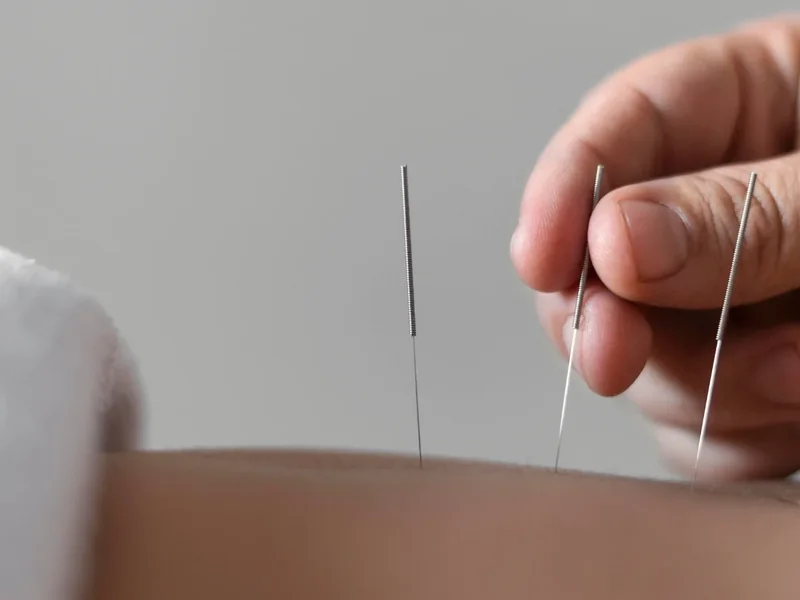
Dry Needling
Precise trigger point release to quiet muscle knots and break pain cycles.

Back Pain & Sciatica
The most common reason people find us. We treat the cause, not the symptom.