Back Pain & Sciatica Treatment in San Antonio
You have stopped bending down for things. You plan the drive, the chair, and the grocery run around whether the leg is going to act up today. That is a lot of quiet effort, and it is not the only option you have left.
What causes back pain & sciatica?
Backs rarely fail in one moment. They fail from load that has been shared badly for years, and then one bend, one lift, or one long drive collects the bill. The pain you feel is coming from a specific structure: a disc, a joint, a nerve, or a muscle that has been covering for one of them. Sciatica is a description of where the pain travels, not a diagnosis. Naming the actual source is what separates real relief from a quiet weekend.

The discs between your vertebrae are pressurised cushions held by a tough outer wall. When part of that wall weakens, the softer centre pushes against it and sometimes through it. If the bulge sits near a nerve root, you get pain that travels past the buttock and down the leg, often with numbness or a weak foot. It usually feels worst bending forward, sitting for long stretches, or coughing. Discs respond well to specific directional movement and graded loading, and most never reach an operating table.
Sciatica names a route, not a cause. The sciatic nerve runs from the low back through the buttock and down the back of the leg, and when it is irritated it produces sharp, electric, or burning pain anywhere along that route. The irritation can come from a disc at the root, a narrowed opening where the nerve exits the spine, or a tight, overworked hip muscle compressing it further down. The treatment for each of those looks nothing like the others, which is why the testing comes first.
Behind each pair of vertebrae sit two small joints that steer how your spine bends and twists. They carry a rich nerve supply, so when they stiffen or become irritated they give sharp, local pain that is worse leaning back, twisting, or standing in one place too long. Stiffness in the morning that eases as you move is typical. These joints respond quickly to hands on mobilisation, and to restoring the hip and mid back motion that has been making them work beyond their share.
Your spine depends on the deep abdominal, back, and hip muscles to share load with it. After a painful episode those muscles reliably switch off, and the low back absorbs forces it was never built to carry alone. It shows up as fatigue by the afternoon, spasm after ordinary tasks, and a back that flares from smaller and smaller things. Rebuilding coordinated strength through the trunk and hips is not decorative core work. It is the part that stops the pattern repeating.
Hours folded into a chair load the discs steadily, shorten the hip flexors, and let the postural muscles go quiet. It is almost never one bad moment that produces this pain. It is thousands of unremarkable hours in the same position, followed by a movement your back was no longer prepared for. Changing how you sit, how often you stand, and how your workstation is arranged is often a larger lever than any stretch.
Sometimes the cause is obvious: a heavy lift with a rounded back, an awkward twist while carrying something, a slip that jolts the spine. The tissue gets overloaded faster than it can adapt and protests loudly, often with spasm that feels far worse than the damage behind it. Acute strains settle faster with early guided movement than with days in bed. The longer goal is teaching you to hinge, lift, and carry so the same injury stops finding you every few months.

How physical therapy in San Antonio helps.
Back pain is one of the most treatable conditions we see, and it rarely needs to begin with imaging, an injection, or a surgical opinion. In Texas you can start without a physician referral for up to 30 days. A hands on assessment identifies which structure is generating your symptoms, and the plan follows from that. Pain, where manual therapy, spinal mobilisation, and dosed movement calm the irritated tissue. Prime, where the motion your spine and hips gave up comes back and the pattern behind this gets corrected. Perform, where progressive strengthening teaches your back to handle lifting, sitting, and your job again. Prevent, where the home programme and the education make it hold. Every session runs 30 to 60 minutes, one on one with your therapist.
What to expect from your recovery.
Evaluation and an honest answer
Your first visit is a full hands on assessment. We watch how you move, test which structure reproduces your symptoms, screen the nerve, and rule out anything that belongs with a physician first. You leave with a plain explanation of what is driving the pain and a timeline built for your case instead of a generic one.
Hands on relief and restored motion
Next we bring the pain down and the movement back. Manual therapy, spinal mobilisation, and carefully dosed loading settle the irritated tissue, and dry needling is used when a trigger point is holding the area hostage. Most people notice a change within the first two to three weeks, which is usually when confidence in bending and lifting starts returning too.
Strength that keeps it away
As the pain settles, we rebuild. Progressive strengthening through the trunk, hips, and back teaches your spine to accept load the way it was built to, using the movements your actual life demands. A typical course runs two to three visits a week for four to six weeks, and you leave with a programme that protects the result.
I was referred by VA to improve my back Flexibility. Special thanks to my physical therapist, for teaching core strengthening plus always having a superb attitude helping her patients improve.
Pain rarely travels alone.
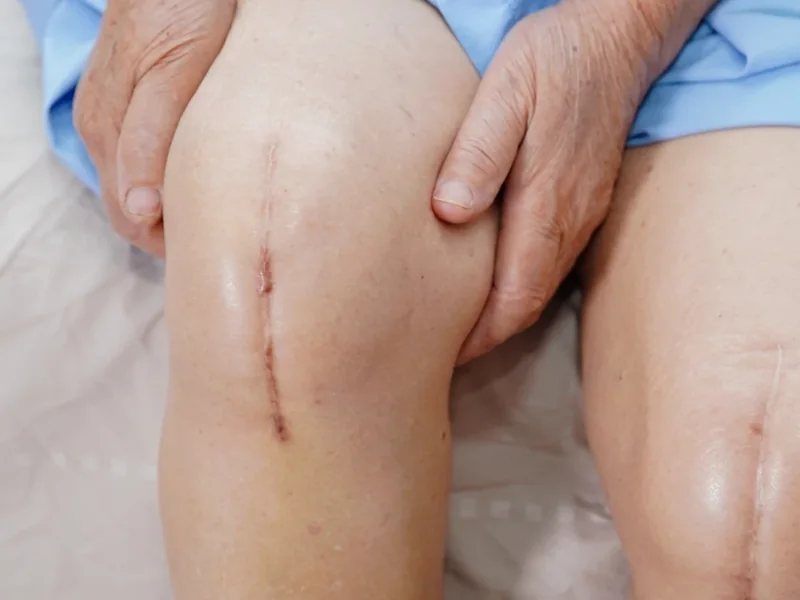
Knee Replacement Surgery
When the hips and knees stop sharing load well, the low back often takes the hit. We treat the whole chain.

Arthritis
Stiff, aching joints that limit your day. We restore the mechanics first, then build the strength.

Headaches
Tension that starts in the neck and spine can drive stubborn headaches. Relief starts with the source.