Dry Needling in San Antonio
You have stretched it, iced it, rolled it and paid someone to work on it, and the knot in your neck or your calf is exactly where it has always been. You are not doing it wrong. Some tissue does not let go until something reaches it directly.
What Is Dry Needling?
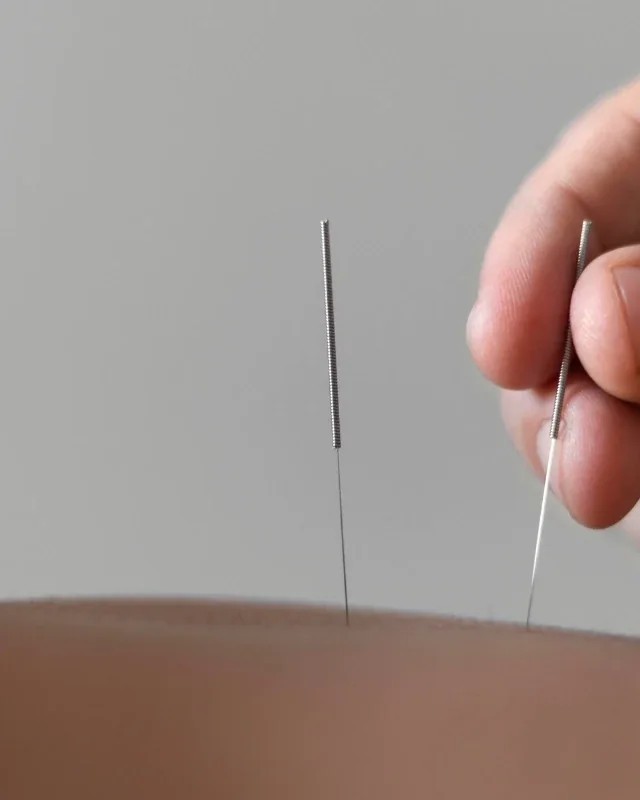
Dry needling places a thin, sterile filament needle directly into a taut band of muscle, the trigger point that has been holding tension and referring pain somewhere else. Nothing is injected, which is where the name comes from. The needle provokes a small local twitch, the muscle fibers release, blood flow returns to tissue that had been starved of it, and the pain signal the muscle had been repeating on a loop begins to quiet. It is not acupuncture. Acupuncture comes from traditional Chinese medicine and works with meridians and energy flow. Dry needling comes out of Western anatomy and neuroscience, and the target is a specific muscle you can put a finger on. At Liberty Rehabilitation Specialists it is performed only by clinicians who carry the Cert. DN credential: Dr. Mary Lou Lugo, DPT, FAAOMPT, CF-L1, Cert. DN, Dr. Alyssa Castillo, DPT, Cert. DN, and Dr. Julie Kiser, PT, DPT, Cert. DN.
Dry needling is a tool inside a plan, never the whole plan. Releasing a trigger point opens a window in which the joint moves further and the muscle fires on time, and that window is where the real work happens: hands-on treatment to free the surrounding tissue, then loaded exercise so the new pattern holds after the soreness fades. Used on its own, needling can feel like a reset that keeps needing to be repeated. Used inside a course of care, it is often the step that finally makes everything else stick. In Texas you can begin without a physician referral for up to 30 days of treatment, so you do not have to wait on an appointment somewhere else first. We are in network with roughly 45 plans and verify your benefits before your first visit.
Who It's For
Dry needling earns its place when muscle pain has not moved for rest, stretching or hands-on work alone. If you can point to the spot and it has been there for months, this is worth an evaluation in San Antonio.
Pain that shows up somewhere else
The ache sits behind your eye, or runs down the back of your leg, or wraps your shoulder blade, and scans of the painful area come back unremarkable. Trigger points refer pain away from themselves, which is why the spot that hurts is often not the spot that is causing it. Your therapist maps the referral pattern back to the muscle producing it and needles that muscle instead. The outcome is a headache or a leg ache that stops being a mystery you have learned to live with.
Range of motion that will not budge
You cannot turn your head to reverse the car. You cannot get your arm overhead without hiking the shoulder. You have stretched daily for months and gained nothing, because a guarded muscle will simply resist a stretch. Needling releases the taut band so the joint gets its range back within the same visit, and the exercises you were already doing suddenly start to take. The outcome is movement you can use, not movement you have to warm up for every single morning.
Overuse pain from a job or a sport
The same motion, all day and every day: a keyboard, a steering wheel, a trowel, a serve, a run. Overloaded tissue develops tender points that flare on a predictable schedule and settle only when you stop doing the thing you cannot stop doing. Needling quiets the irritated muscle, then your therapist changes the mechanics and the load that keep feeding it. The outcome is getting through a shift or a session without counting down to when it starts hurting.
What to Expect
Needling is one part of a visit that runs 30 to 60 minutes, one on one. Here is how that part of it actually goes.
Screening, consent and positioning
Your therapist confirms the technique is appropriate for you, reviews your medications and medical history, and explains what the needle will feel like before anything happens. You give consent, and you can stop at any point. Then you are positioned so the muscle is relaxed and supported, because a guarded muscle is harder to treat and far less comfortable to needle.
Insertion and the twitch response
A single-use sterile needle passes through the skin, which most people barely register, and enters the taut band. You may feel a deep ache, a cramp or a brief involuntary twitch. That twitch is the point: it is the muscle releasing. The needle stays in only as long as it needs to, and your therapist keeps checking in on what you are feeling.
Move on it before you leave
Needles are disposed of immediately and you get up and use the new range straight away, because the nervous system keeps what it gets to practice. Expect the treated area to feel achy or heavy, similar to the day after hard training. Move gently, keep your fluids up, and bring any lingering soreness back to your next visit.
Dry needling is not right for every person or every day, and a short conversation before your first session settles it. Tell your therapist if you take a blood thinner or have a bleeding disorder, if you are pregnant or think you may be, and if needles make you faint, panic or feel unwell. We do not needle through skin that is infected, broken out, burned or inflamed, and we work around a fresh surgical site or a recent joint replacement. Bring a current list of everything you take, including over the counter medicines and supplements that affect bleeding, and mention any condition that suppresses your immune system, any lymphedema, and any implanted device such as a pacemaker. None of these automatically rules you out. They change where, how and whether we needle that day.
On my very first visit, I was greeted and made to feel welcome. The staff was very friendly and professional which eased my concerns almost immediately.
Where to go next.
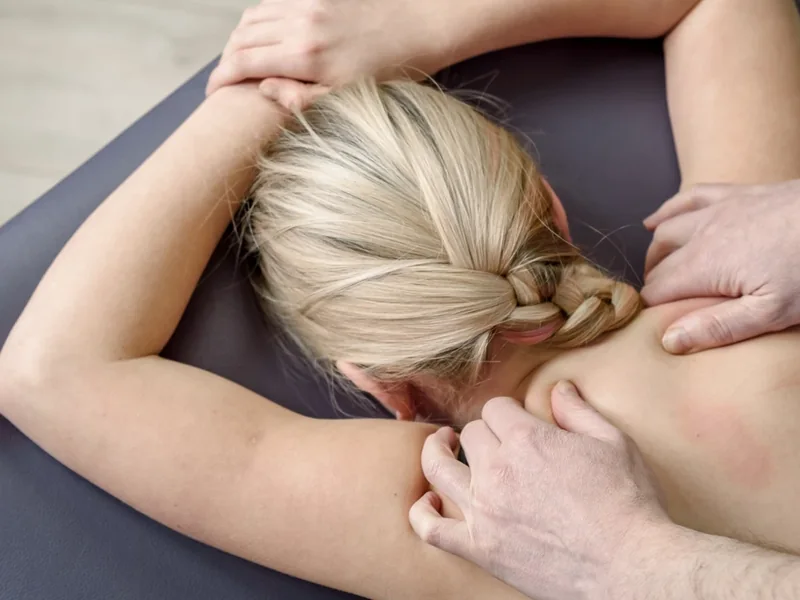
Manual Therapy
Hands-on techniques to release tension and restore movement where you need it most.

Massage Therapy
Soft tissue work that eases tension, improves circulation and makes the rest of your program easier.
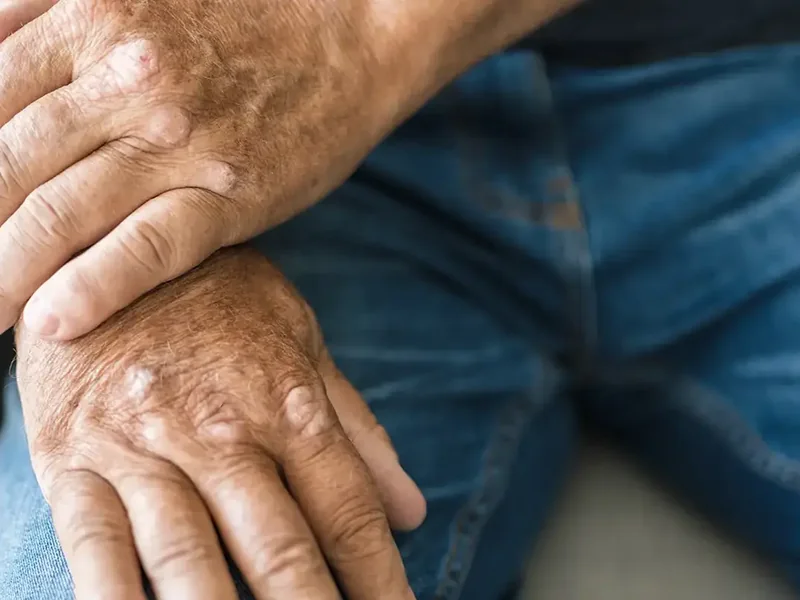
Arthritis
Protect the joint, keep the range you have, and get through a day without paying for it later.