Blood Flow Restriction in San Antonio
Your surgeon cleared you to start, but the leg still will not take real weight. You can watch the muscle disappearing faster than you are allowed to rebuild it.
What Is Blood Flow Restriction?
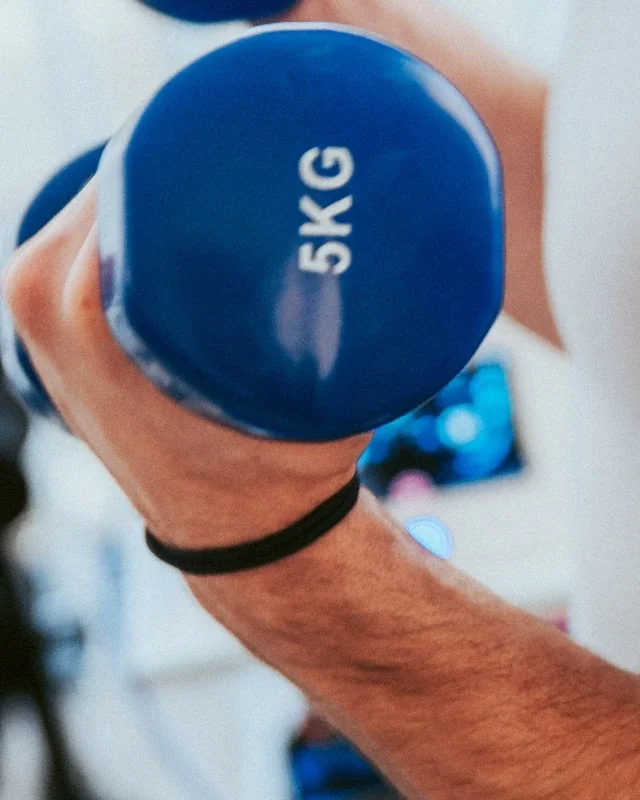
Blood flow restriction is a training method, not something done to you while you lie still. Your therapist fits a calibrated cuff high on the arm or the leg, sets it to a pressure measured for your limb, then has you exercise with a light load. Arterial flow into the muscle continues. Venous return out of it is partially slowed. The muscle fatigues far sooner than that load alone would explain, and it responds by getting stronger. This matters because of a gap most people hit after surgery or during a painful flare. Building strength normally takes heavy loading, and heavy loading is exactly what a repaired knee, an irritated shoulder or an arthritic hip cannot tolerate yet. So the joint gets protected while the muscle keeps shrinking, and by the time the joint is ready, the limb is not. Blood flow restriction closes that gap. It lets you train hard enough to hold and build muscle while the tissue underneath is still healing.
It is applied and supervised by a trained clinician every time, with the cuff pressure set to you and the sets, reps and rest watched in real time. It is also not appropriate for everyone, which is why screening comes first. Your therapist reviews your medical history and asks about things such as a history of blood clots, uncontrolled high blood pressure or pregnancy, and will say plainly if this is not a good fit. If it is not, there are other ways to load the muscle safely and you will leave with one.
Who it's for.
Blood flow restriction earns its place when the muscle needs work and the joint cannot take it yet. These are the situations where it does the most, once your therapist has screened you for it.
Early after knee or shoulder surgery
You are weeks out from a ligament repair, a rotator cuff repair or a joint replacement. Your surgeon has limits on what you can load, and you can already see the difference between your two sides in the mirror. Cuffed training lets you work that muscle hard at a load your repair tolerates, so you are not starting strength from nothing on the day your restrictions lift. You protect the surgery and keep the muscle at the same time.
An arthritic joint that punishes heavy loading
Stairs and squats already hurt, so lifting anything meaningful is off the table, and the muscle around the joint has been quietly fading for years. Your therapist uses light resistance under cuff pressure to build the muscle that supports and offloads that joint, without the compression that sets your knee or hip off. Stronger muscle around a stiff joint is what makes standing, walking and getting off a low chair feel less expensive.
Stalled partway back to your sport or your job
You are past the worst of it and cleared for most things, but the injured side still gives out on the last rep, the long shift or the fourth mile. The gap is capacity, not pain. Cuffed sets added to the end of your session drive extra fatigue into the limb that is behind, without piling more joint load onto a body already absorbing your training. It is targeted volume exactly where you need it.
What to expect in a session.
Every session is measured and supervised. Nothing about it is guesswork, and nothing happens before the screening does.
Screening and limb measurement
Before a cuff goes anywhere, your therapist reviews your medical history, screens for the conditions that rule this out, and measures the pressure your specific limb needs. That number is personal to you, and it is not the same on an arm as on a leg. If the screening turns up a reason to skip it, you will hear that at the evaluation and the plan gets built another way.
Cuffed sets under supervision
The cuff sits high on the limb and inflates to your measured pressure. You work through short sets of light resistance with brief rests, and the muscle burns well before that weight would normally cause it to. Your therapist stays with you the whole time, watching your response and your form, and the cuff comes off between exercises.
Back into the rest of your plan
Cuffed work is a block inside your session, never the whole session. The rest is hands-on care, mobility, and the loaded movement that carries new strength into real tasks. Your therapist rechecks your measurements as you go and drops the cuff entirely once the joint can handle weight on its own. A typical course runs two to three visits a week for four to six weeks.
Expect firm pressure at the cuff and a strong burn in the muscle, and expect both to fade quickly once the set ends. Tell your therapist about any change in your health between visits, because the screening that cleared you the first time is worth repeating.
It was a positive experience. Learned exercises I could do at home and this helped me achieve my goals.
Where to go next.
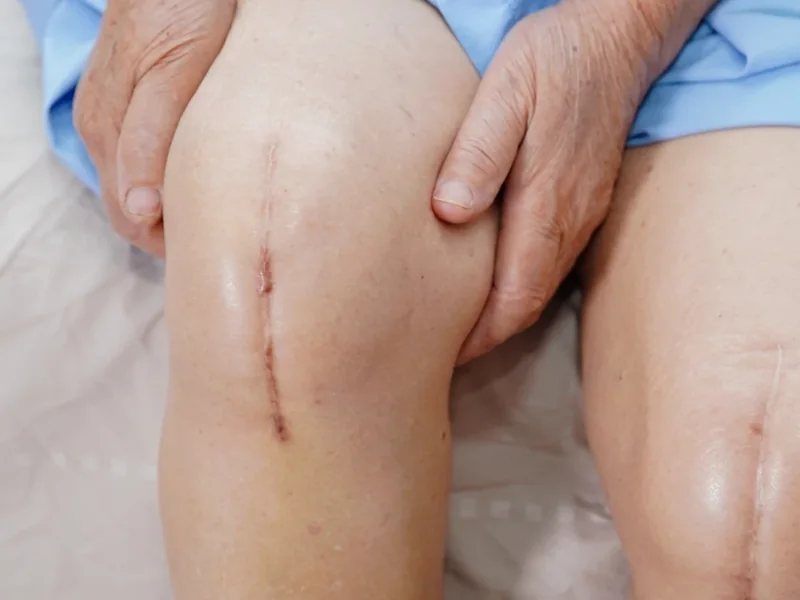
Knee Replacement Surgery
Rebuilding the quad and the confidence to trust a new knee, from the first protected weeks through full return.
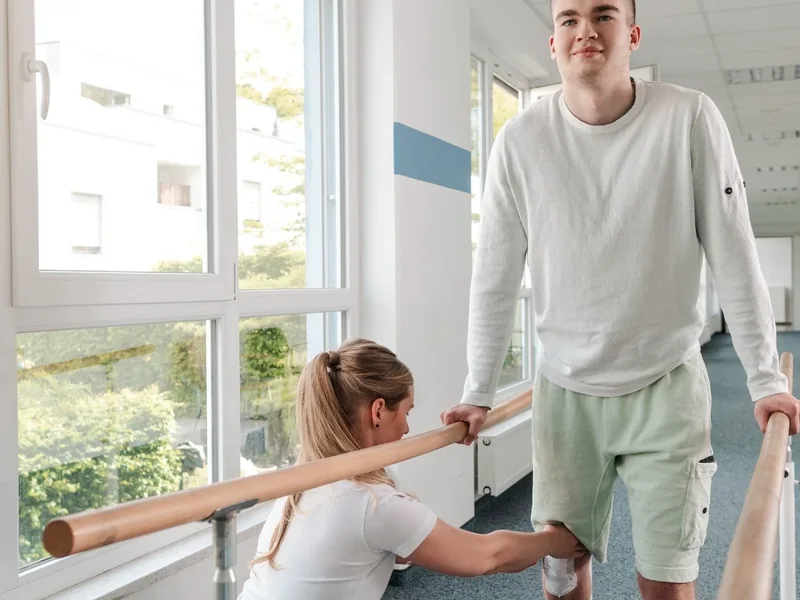
Sports Rehab
Where cuffed strength work turns back into speed, power and a return-to-play plan for your sport.
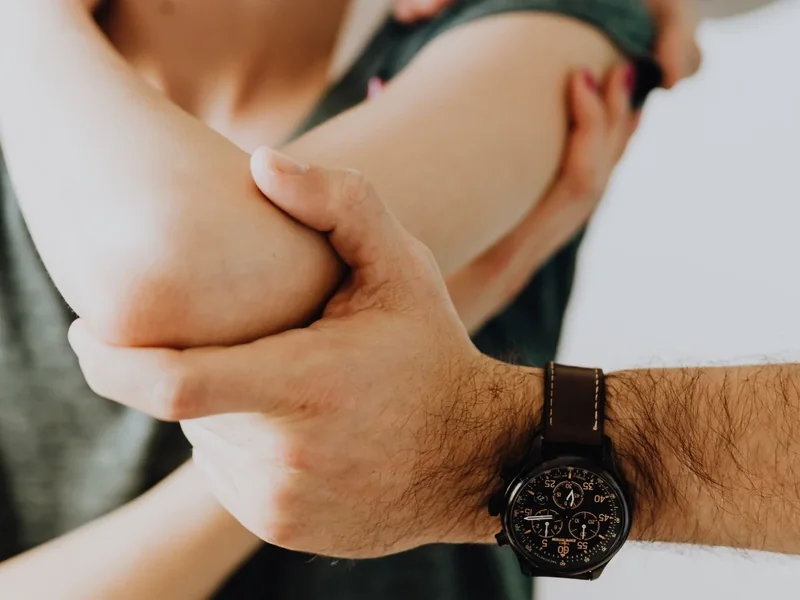
Orthopedic Therapy
Care for joints, tendons and post-surgical recovery, planned around what your tissue can actually take right now.