Ultrasound in San Antonio
The shoulder has been sore for months and you have already tried heat, ice and waiting. You are not looking for a miracle machine. You want to know what actually moves the needle.
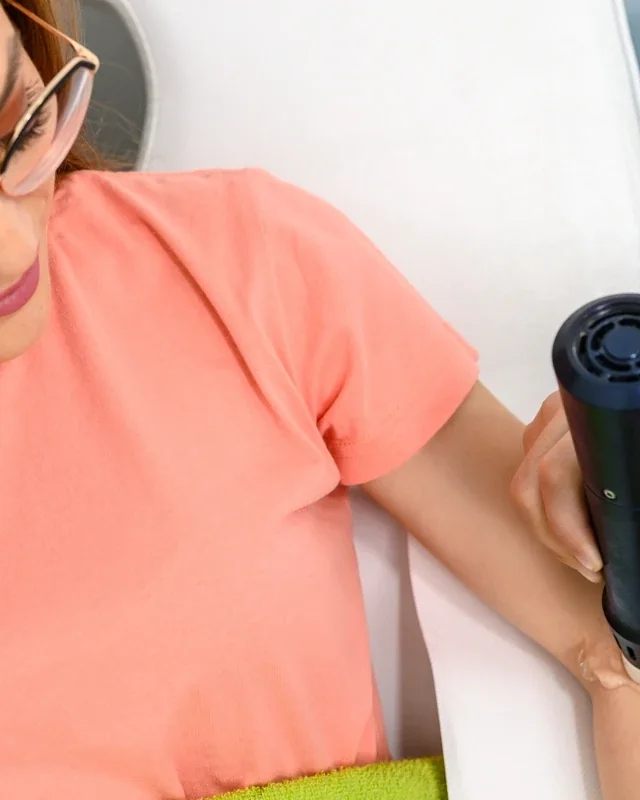
What Is Ultrasound?
Therapeutic ultrasound is a modality. A handheld head, a layer of gel, and sound waves at a frequency you cannot hear passing into the soft tissue underneath. Depending on the settings your therapist selects, it either warms the tissue at depth or delivers the energy with very little heat at all. What it does not do is fix anything on its own. Here is what it is genuinely good for. Warmed, more pliable tissue stretches further and hurts less while you stretch it. A calmer, less guarded area tolerates hands-on work that would have been too sharp a few minutes earlier. That is the honest role. Ultrasound opens a window, and the manual therapy, mobilization and loaded exercise that follow are what actually change the tissue.
So we use it as an adjunct. It appears in your plan when your therapist has a specific reason for it on a specific day, almost always to make the rest of the session more productive, and it comes back out of the plan once that reason is gone. It is never the whole visit, never a substitute for the work, and you will never be parked with a machine while your appointment runs down. Ultrasound will not rebuild a tendon, reverse arthritis or replace the strengthening that keeps an injury from returning. Used well, at the right moment, it makes the treatment that does those things easier to tolerate. That is a real contribution, and it is a smaller claim than most people have been given.
Who it's for.
Ultrasound is not a reason to book an appointment on its own. It is a tool that helps in particular situations inside a plan. These are the ones where it usually earns its place.
Tissue too guarded for hands-on work
A stiff shoulder, an irritated elbow or a tender calf can be so protective that manual therapy turns into a fight from the first contact. A few minutes of ultrasound over the area beforehand often takes enough edge off that your therapist can work properly and you can tolerate it. The gain is not the ultrasound itself. It is the mobilization and stretching that finally become possible in the same visit.
Stiffness that caps how far you can stretch
There is range you cannot reach, and every attempt stops at the same wall of tightness. Warming the tissue at depth first makes it more willing to lengthen, so the stretching and joint mobilization that follow reach further and hold better. Your therapist pairs the two deliberately and immediately, in that order. Heat from a pack does not travel deep enough to do the same job.
A post-surgical area that needs coaxing
Scar tissue and months of protecting a repair leave an area stiff, sensitive and slow to respond. Ultrasound is one of several ways your therapist softens the ground before the work that matters: soft tissue techniques, graded motion and the loading that rebuilds strength. It is used in short, purposeful bouts alongside everything else, and it is dropped as soon as the area no longer needs the help.
What to expect in a session.
If ultrasound is part of your visit, it is a short segment inside a full session rather than the session itself. Here is how it fits.
Your therapist decides whether it belongs
At your evaluation your therapist examines the area, works out what is actually limiting you, and builds the plan around that. Ultrasound is added only when there is a clear reason, such as tissue that needs warming before manual work, and it is screened against the places where it should not be used. You will be told why it is on your plan and what it is meant to do.
The treatment itself
Gel goes onto the skin so the sound waves transmit properly, and your therapist moves the head slowly and continuously over the target area. Most people feel mild warmth, and plenty feel nothing at all. It should never be painful, and you should say so if it is. The segment is brief by design, because the point is to set up what comes next.
The work that follows immediately
The rest of your appointment is where the change happens. Hands-on treatment, stretching into the range you just gained, then loading it so your body keeps it. You leave with a home program, because what you do between visits carries far more weight than any modality. Your therapist reassesses each visit and removes ultrasound once it has stopped adding anything.
Tell your therapist if you have a pacemaker or another implanted device, a known malignancy, or if you are pregnant, since there are areas where ultrasound should not be applied. It is one option among the therapy programs we offer, and it is never the only one on your plan.
Excellent and knowledgeable staff! Great experience and I'd recommend this place to anyone
Where to go next.
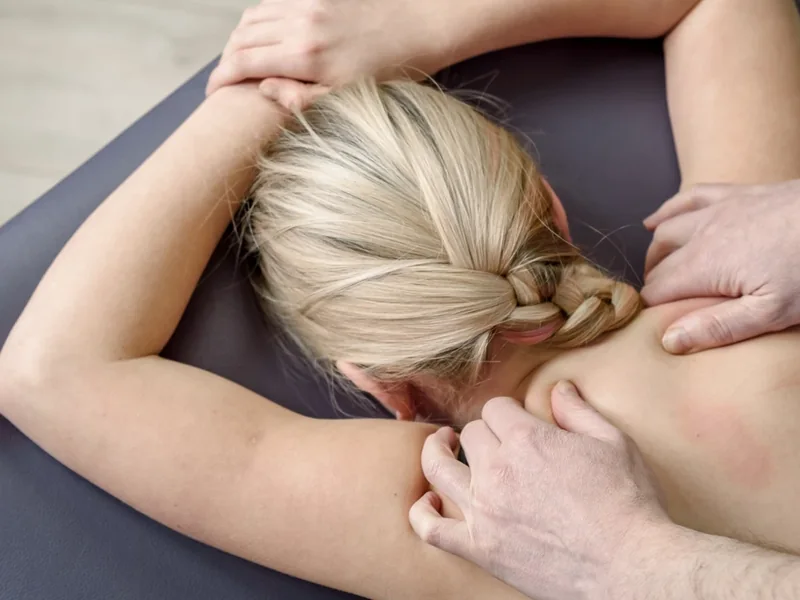
Manual Therapy
The hands-on work ultrasound is usually there to set up, and the part that does the heavy lifting.
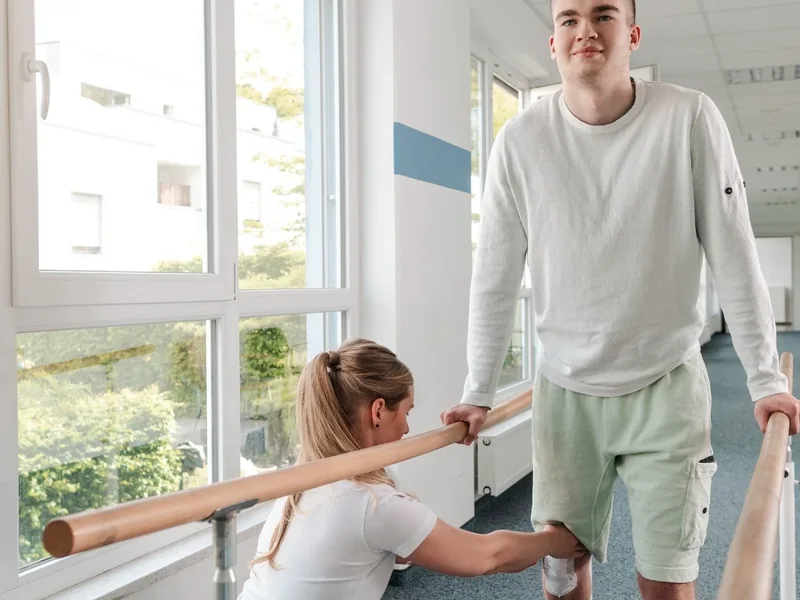
Sports Rehab
Where a stubborn tendon or a stiff joint gets a full plan, not just a modality. Built around your sport.
Back Pain & Sciatica
The most common reason people find us, and a plan built on far more than any single machine.