IASTM in San Antonio
The stiffness has a shape. You can put a finger on the exact band that catches when you reach, and you have been working around it for months.
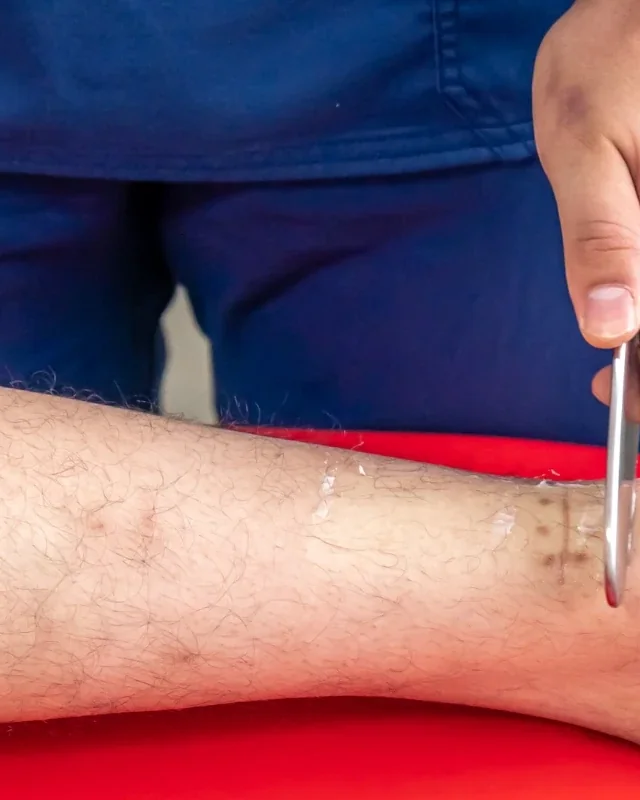
What Is IASTM?
IASTM stands for instrument assisted soft tissue mobilisation, and it is a category rather than a single product. Instruments of different shapes, edges and weights are drawn across muscle, tendon and fascia so your therapist can both feel and treat tissue that has thickened, scarred or bound down to the layer beneath it. The bevelled edge of a tool transmits texture that fingertips smooth over, which is why an IASTM assessment often finds restriction in a place you would not have thought to mention. Treatment and assessment happen in the same stroke: your therapist follows the restriction where it actually runs instead of stopping at the spot that hurts. On its own, though, instrument work only opens a window. Ours is paired with stretching, with joint mobilisation where the joint itself is stiff, and with corrective exercise that teaches the freshly mobile tissue a better movement pattern before it settles back into the old one. Visits run 30 to 60 minutes, one on one, with the same therapist each time.
ASTYM is one certified, protocol driven system within this category, and it has its own page. IASTM here is the broader toolkit: your therapist chooses the instrument, the angle, the pressure and the direction based on what your tissue is doing that day rather than following a fixed script. If the restriction is a broad fascial sheet, that calls for a different tool and stroke than a thin band around a tendon. Texas direct access lets you begin up to 30 days of physical therapy with no physician referral, and we are in network with roughly 45 plans.
Who it's for.
IASTM suits problems where the limit is the tissue itself: a band that will not lengthen, a scar that will not glide, a knot that returns the same week every time.
A shoulder that has lost its reach
Adhesive capsulitis, a long spell in a sling, or months of guarding after an injury. Reaching a seatbelt or a top shelf now takes a workaround you have stopped noticing you make. Instrument work along the capsule, the lat and the posterior cuff addresses the restriction while joint mobilisation deals with the joint itself, and each session ends with reaching drills that hold the range you just gained. The aim is to get overhead without rehearsing the movement first.
Runners and walkers with a stubborn band
Plantar fascia, Achilles, IT band, a hamstring that never fully released after a strain. It eases in the first mile, comes back in the third, and it has quietly rewritten your route and your pace. Your therapist treats the whole line rather than the tender point, then loads it while the tissue is receptive. The aim is to lengthen your run back to what it was without paying for it the next morning.
Repetitive strain from work at a desk or a bench
Forearm and wrist tightness from a keyboard, a grip that fades on a tool by the afternoon, trigger points across the neck and upper back that build every week. This is the slow kind of injury that never earns a day off, so it just accumulates. IASTM releases the thickened tissue, and the posture and strength work that follows changes the load that keeps rebuilding it. The aim is a workday that does not cost you the evening.
What to expect in a session.
Instrument work is one part of the visit, never the whole of it. Here is the order things happen in, and why the order matters.
Screen the movement, then the tissue
Your therapist watches the movements that provoke your symptoms and measures range on both sides, then sweeps the area with an instrument to locate restriction by feel. The tool reports back through the handle, so the map of what needs treating gets built before a single treatment stroke is made.
Treat along the restriction
With a light emollient on the skin, the instrument is worked along the grain of the tissue and across it, following the restriction through its full length. Pressure and angle change as the tissue changes. You feel a rough, gritty drag over the affected areas and very little over the healthy tissue either side of it.
Move it before it sets
Newly mobile tissue needs to be used straight away, so the session finishes with stretching, joint mobilisation where the joint needs it, and corrective exercise in the exact pattern you struggled with at the start. You leave with a short home programme so the range you gained today is still there at your next visit.
IASTM is not right for everyone. Tell your therapist if you take anticoagulants or bruise easily, if you have a clotting disorder, severe osteoporosis, an active infection, an open wound, a rash or a recent fracture near the area, or if you are pregnant. Mild redness and short lived soreness afterwards are normal, and your therapist will screen for all of this at your evaluation before treating.
Everyone is just absolutely wonderful. Facility is clean and the environment is awesome.
Where to go next.
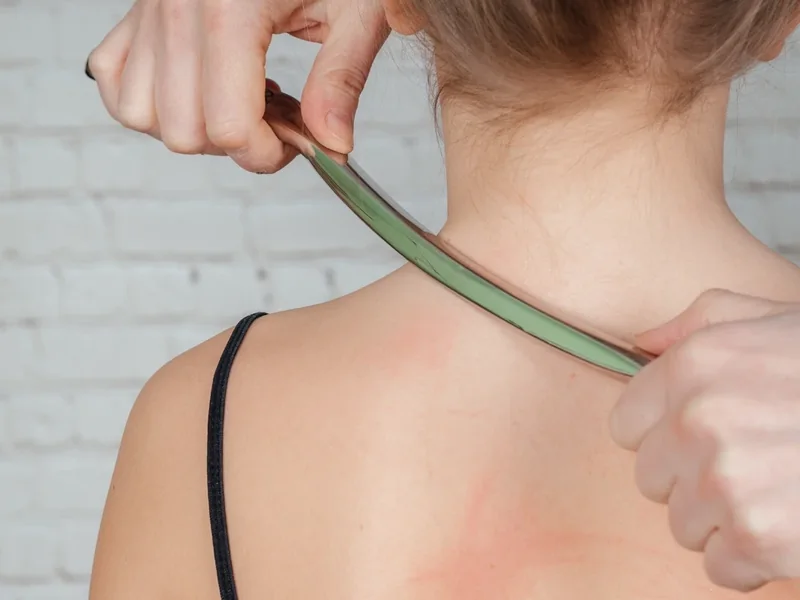
ASTYM
The certified, protocol driven system inside this category, built to stimulate tissue regeneration in scarred or degenerated tendon.
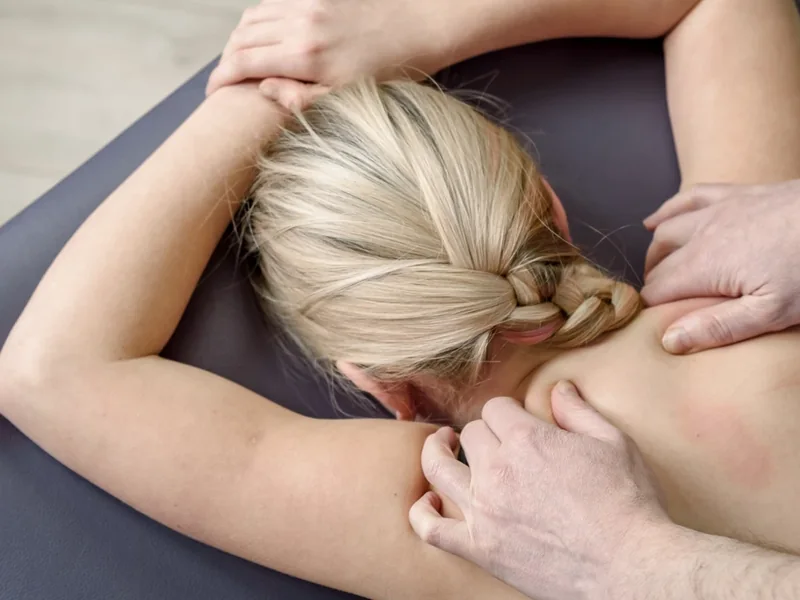
Manual Therapy
The hands-on joint and soft tissue work that runs alongside instrument treatment in the same visit.
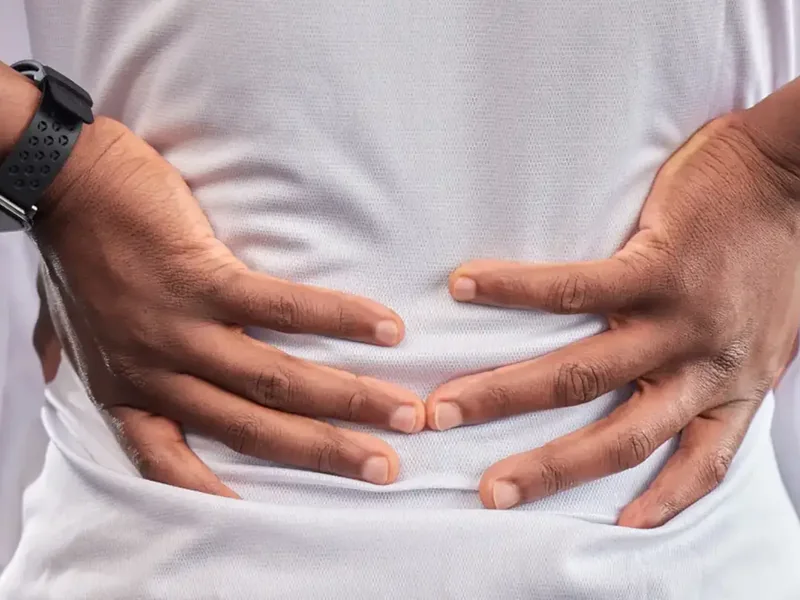
Back Pain & Sciatica
Thoracolumbar fascia and hip restriction sit behind a great deal of stubborn back pain. Here is how we work them.