Unloader (Pneu-Weight) Therapy in San Antonio
Walking hurts, so you walk less, and walking less has made everything else harder. You have started measuring outings by how long you will have to be on your feet.
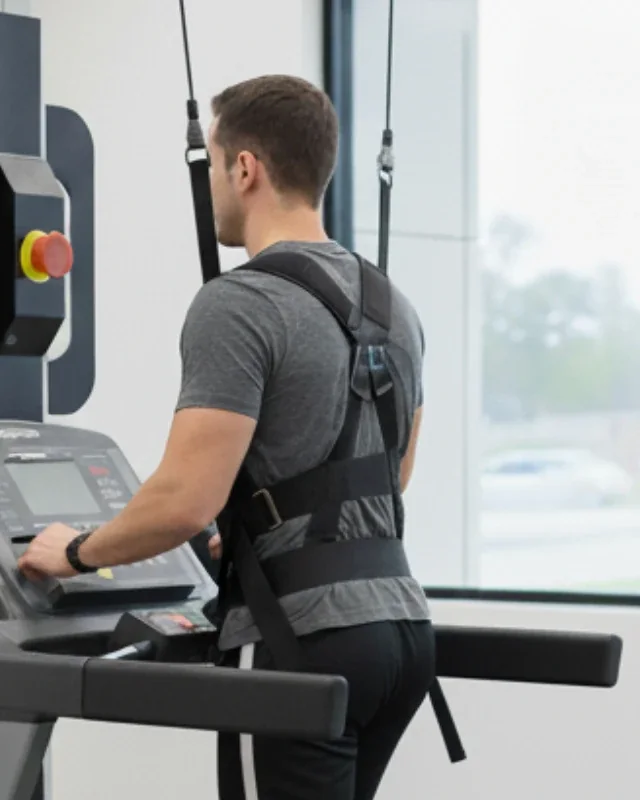
What Is Unloader (Pneu-Weight) Therapy?
Unloader therapy, run on the Pneu-Weight system, takes a share of your body weight off your joints while you walk and train on solid ground. You step into a supportive harness connected to an air pressure column above a treadmill, and your therapist dials in how much of your weight the system carries. You keep moving normally. Your spine, hips, knees and ankles simply stop absorbing all of it. That changes what is possible in a session. Aquatic therapy offers something similar, but it means a pool, a changing room and water you cannot easily load or strengthen in. The Pneu-Weight gives you the offloading without any of that, on a surface your body already knows how to walk on, and the support comes down week by week as you get stronger. The machine is a bridge, not a destination.
It also removes the fear. The harness is a fall prevention system, so you can push your gait, your speed and your balance further than you would dare on your own, and nothing bad happens if you falter. For many people that is the first time in months they have walked without bracing for it. The therapy is not the treadmill, though. It is what your therapist has you do on it: gait retraining, posture correction, strengthening and endurance work, all of it available again once the weight comes off the painful joint. In Texas you can start without a physician referral for up to 30 days of treatment.
Who it's for.
Unloader therapy is for the person whose body will not let them do the work that would make it better. If pain or fear is what stops you, rather than effort, this is where to start.
A hip, knee or ankle that shuts down walking
Degenerative joint pain has turned every step into a negotiation, so your walking has shrunk, and your strength and endurance have gone with it. Take enough weight off the joint and the same walk stops hurting. Your therapist uses that space to rebuild the muscle around the joint and correct the limp you developed compensating for it, then reduces the support as the joint tolerates more. Distance comes back before the joint is fully quiet.
A back that cannot tolerate upright time
Disc trouble, sciatica or degenerative change has made standing and walking the two things you avoid, and sitting is no better by the third hour. Unloading the spine lowers the compression driving your symptoms, so you can move long enough to actually train. Your therapist works on posture, core control and gait while the load is off, then walks the support back down as your tolerance climbs.
Balance that has stopped feeling reliable
You have caught yourself once too often, and now you plan your route around handrails. The harness removes the consequence of a stumble, which is what finally lets you practice at the edge of your balance instead of well inside it. Your therapist adds speed, direction changes and head movement while you are protected, and that is where real balance gains live. Fall prevention and confidence are the same program.
What to expect in a session.
The first visit is an evaluation, and the system only enters your plan if it belongs there. Here is how it goes.
Evaluation and setup
Your therapist watches you walk, tests your strength and balance, and finds out what your joints and your spine will genuinely tolerate. If unloading is the right tool, you are fitted into the harness and the support is set at the point where your pain drops but your legs still have to work. Getting in and out takes a couple of minutes, and you stay in your own clothes and shoes.
Walking and working with the load off
You walk, and your therapist coaches the parts that have gone wrong: step length, weight shift, where your eyes go, what your hips are doing. Strengthening and conditioning happen here too, at intensities your joints could not take unsupported. You feel the effort in your muscles rather than your joints, which for a lot of people is a first in a long time.
Weaning the support, then taking it outside
Each week your therapist lowers the amount of weight the system carries, so more of you returns to the joint as it becomes able to take it. Alongside that you train off the machine and at home, because the goal was never a good session on a treadmill. A typical course of care runs two to three visits a week for four to six weeks.
The Pneu-Weight is installed at one of our three San Antonio clinics, so mention it when you call and we will book your evaluation at the right location. Wear supportive shoes and clothes you can walk in.
My second time there in a year Dr Lugo knows here trade and helpful to allow me to function i.e. cooking gardening driving and sleeping well Liberty Professional & Support Staff is beyond reporch….
Where to go next.
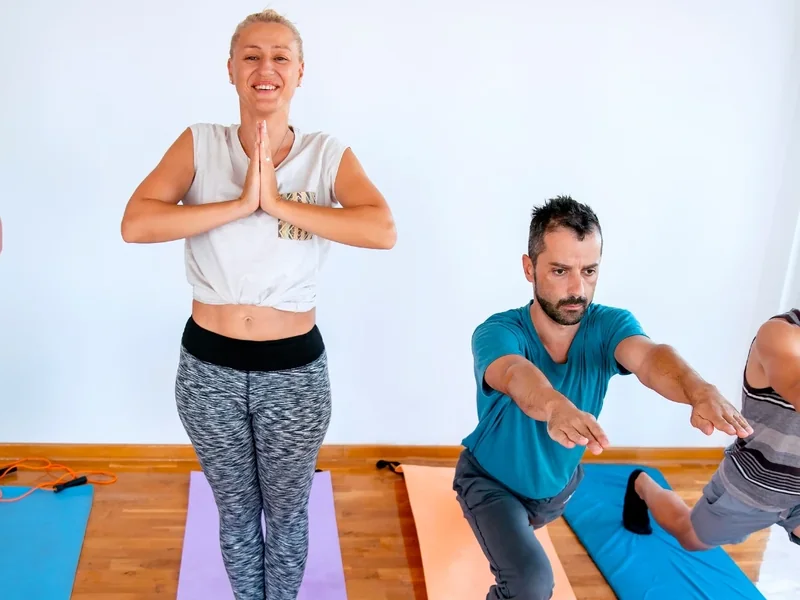
Balance Therapy
Targeted work on the systems that keep you upright, so a stumble stops turning into a fall.
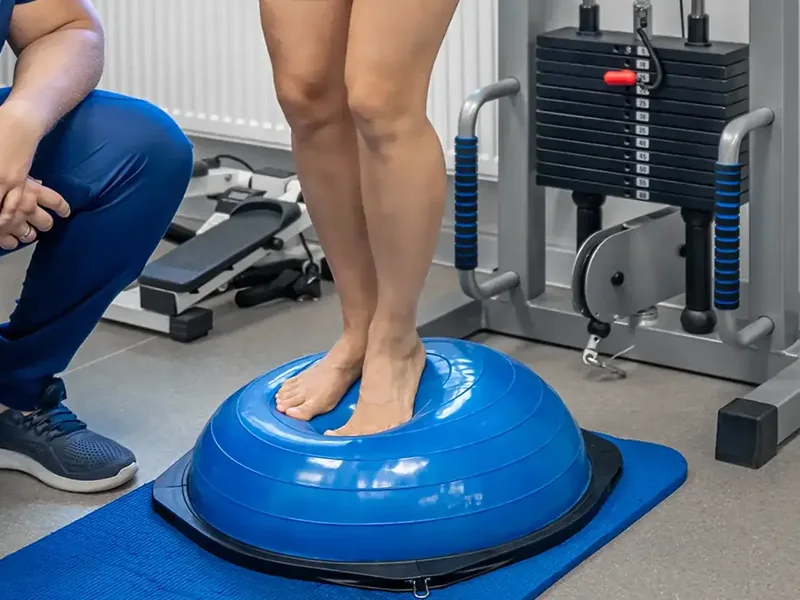
Balance & Gait Disorders
When walking has become something you have to think about, this is where we find out why.

Back Pain & Sciatica
A spine that cannot tolerate upright time is one of the clearest reasons to take the load off it.