Arthritis Treatment in San Antonio
You have started planning around the stiffness: the slow first hour of the morning, the chair you no longer sit in, the jar you hand to somebody else. You have been managing this carefully for a while. There is more available to you than management.
What causes arthritis?
Arthritis is a family of conditions, not one diagnosis, and the differences decide the treatment. Some of it is cartilage that has thinned under decades of load. Some of it is inflammation your immune system is generating. Some of it traces back to an injury that was never fully rehabilitated. What they share is a joint that stiffens, muscles around it that weaken, and pain that quietly teaches you to move less. That last part is the part therapy changes fastest.
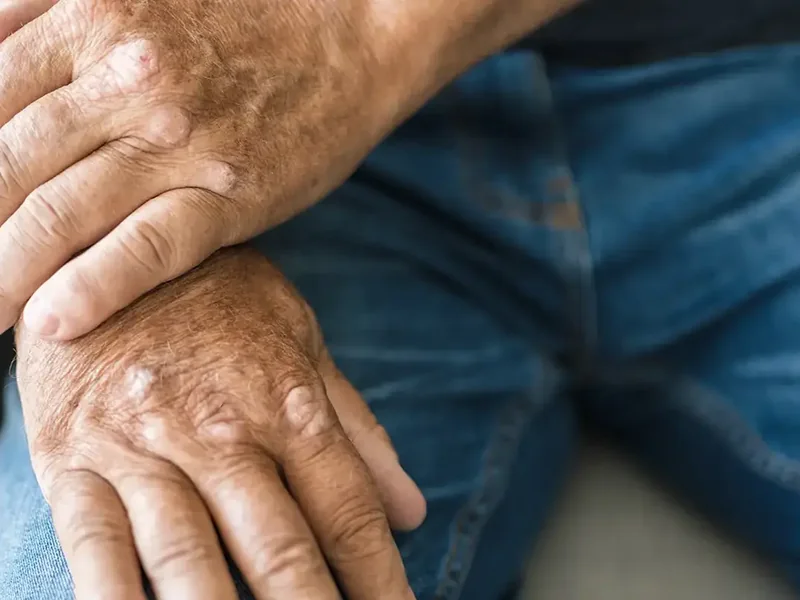
The smooth cartilage that lets a joint glide thins under years of load, and the bone beneath it starts absorbing more of the force. That is osteoarthritis, and it shows up most in knees, hips, hands, and the spine. It is not a countdown clock. Cartilage itself carries no nerve supply, so the pain is coming from the tissues around it: an irritated joint lining, a tightened capsule, and muscles working overtime to stabilise. Every one of those responds to loading, strengthening, and hands on work.
Rheumatoid and psoriatic arthritis behave differently. The immune system targets the joint lining itself, which is why these usually involve several joints at once, morning stiffness that lingers well past breakfast, visible swelling, and fatigue unrelated to how much you did the day before. Medical management belongs to your physician. Therapy runs alongside it, holding onto range of motion, protecting joints through a flare, and building strength during the quiet stretches so the next flare costs you less function.
A fracture, a ligament tear, a meniscus injury, or a joint that was immobilised and then simply used again. If strength and mechanics never came back fully, that joint has been carrying load unevenly ever since, sometimes for decades. Arthritis after trauma is the bill for that. The work now is the work that got skipped then: restoring the motion the joint lost, rebuilding the muscle that protects it, and unwinding the compensation the rest of the limb built around it.
Pain makes you use the joint less. Less use weakens the muscle around it quickly, and weaker muscle sends more force straight through the joint surface, which produces more pain. This is the fastest moving part of arthritis and also the most reversible. Strength returns at any age. Progressive loading, dosed so it does not flare you, is what breaks the cycle, and it is why we would rather find your safe starting point than tell you to rest.
Joints tolerate load remarkably well when it is shared, and badly when it is not. A stiff ankle pushes force up into the knee. A weak hip lets the knee drift inward with every step. A back that will not rotate makes the shoulder do more. Over years, that uneven distribution wears specific surfaces faster than the rest. Correcting how you squat, climb stairs, and walk changes what the joint absorbs thousands of times a day, so mechanics get treated, not just symptoms.
Joints are fed by movement. Cartilage has no blood supply of its own and depends on compression and release to exchange fluid, so a joint held still all day grows stiffer and more sensitive. That is why the first steps out of bed or out of a chair hurt most, then ease. Long stretches in one position, whether that is a desk, a commute, or a recliner, work quietly against you. Frequent small movement usually does more than one long session.
How physical therapy in San Antonio helps.
Rest is what an arthritic joint asks for. Load, dosed properly, is what it responds to. Therapy works on three fronts at once: restoring the motion the joint has given up, rebuilding the muscle that shields it from force, and changing the mechanics loading one surface harder than the rest. Your care follows the four phases we use for every condition. Pain, where hands on treatment and gentle movement take pain out of the driver's seat. Prime, where range of motion and movement patterns get corrected. Perform, where strength gets rebuilt for stairs, groceries, and whatever your day actually demands. Prevent, where you leave with the home programme and the education that hold it. In Texas you can begin without a physician referral for up to 30 days. We are in network with roughly 45 plans and verify your benefits before the first visit, so you know your coverage in writing before you start.
What to expect from your recovery.
Evaluation and a starting point that fits
We test the joints that hurt and the ones directly above and below them, measure motion and strength, and watch how you walk, squat, and climb stairs. Then we find the level of loading your joint tolerates today. Sessions run 30 to 60 minutes, one on one, with the same therapist every visit, so nobody has to relearn your case.
Calming the joint while you keep moving
Early treatment reduces the irritation with hands on work, joint mobility, and movement dosed to stay under your flare threshold. You keep using the joint instead of resting it into more stiffness. Most people notice a change within the first two to three weeks, and your therapist will tell you at the evaluation what to expect for your specific joints.
Strength, then a plan you keep
As pain settles, loading progresses. Stronger hips, quads, calves, and grip mean less force reaching the joint surface with every step, every stair, and every lift. A typical course is two to three visits a week for four to six weeks. You finish with a home programme built around the equipment you actually have and the activities you want back.
It was a positive experience. Learned exercises I could do at home and this helped me achieve my goals.
Pain rarely travels alone.
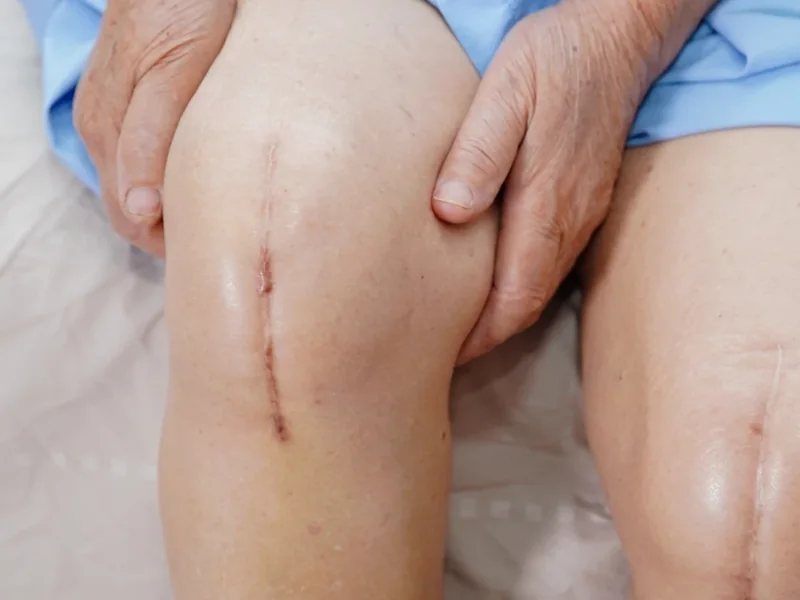
Knee Replacement Surgery
Regain the motion and quadriceps strength that decide how well a knee replacement goes.
Hip Replacement Surgery
Before and after your hip replacement, so the new joint gets the strength it needs.
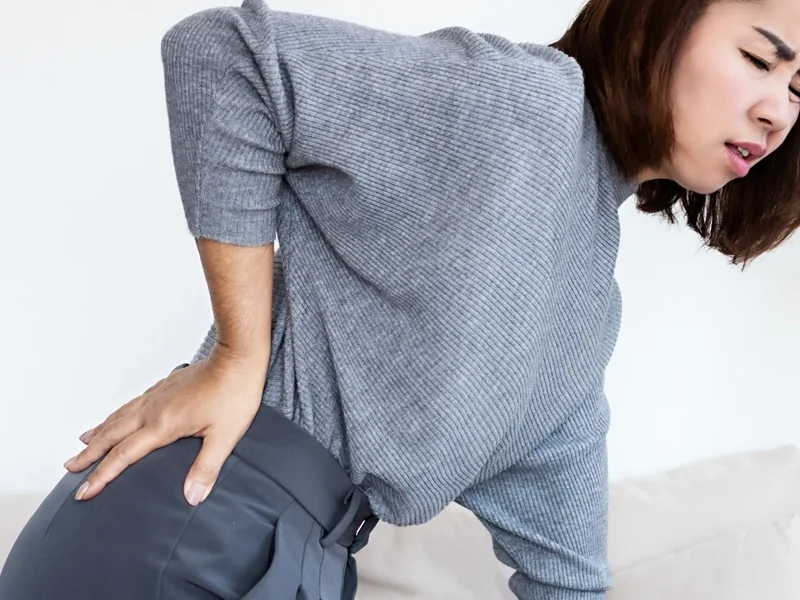
Back Pain & Sciatica
The reason most people walk through our door. We find the cause, not just the symptom.