Sports Injuries in San Antonio
You already know the difference between sore and hurt, and this one is hurt. Being told to rest it for a few weeks does not answer the question that actually matters, which is what has to be true before you can go back without doing it again.
What Causes Sports Injuries?
An injury in sport arrives either all at once or slowly. Something exceeds what the tissue can take in a single moment, or the tissue's capacity quietly falls behind what training keeps asking of it. The rehab is only as good as the answer to which one happened, because a hamstring that tore in a sprint and a hamstring that has been complaining for a month need very different plans.
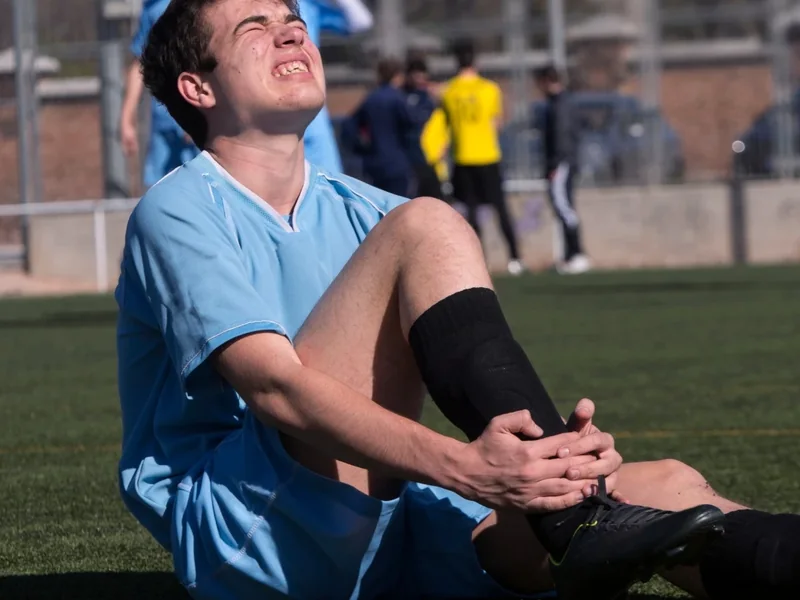
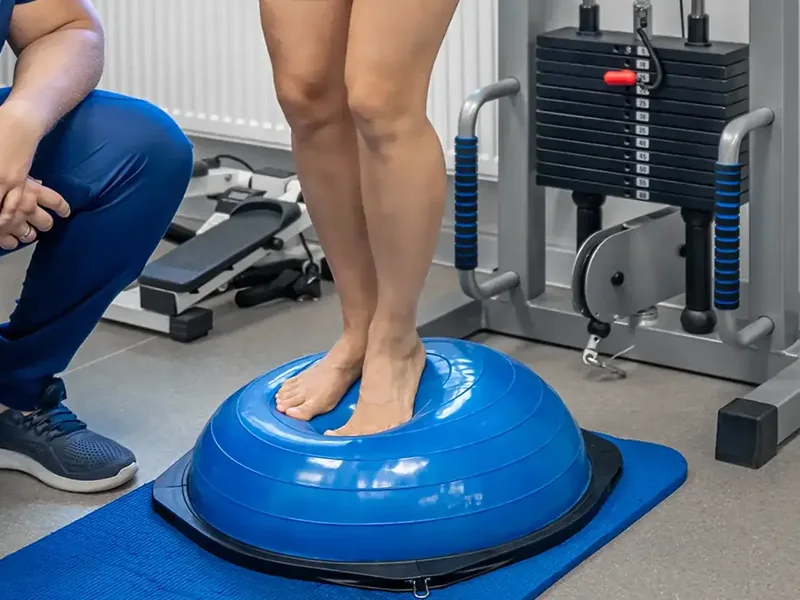
A sprain is a ligament stretched or torn, most often at the ankle after a bad landing or a cut, and at the knee when the foot is planted and the body keeps rotating. Ligaments carry the sensors that tell your brain where the joint is, so the loss is never only mechanical. Balance and reaction time go with it. That is why treatment includes balance and proprioceptive work alongside strength, and why an ankle rehabbed properly the first time is far less likely to roll again.
Hamstring, calf, quad and groin strains happen at speed or at stretch, usually late in a session once fatigue has arrived. The muscle heals with scar tissue that is shorter and less tolerant than what it replaced unless it is loaded through range while it heals. Returning on comfort alone is the reason strains recur so reliably. Rehab loads the muscle in lengthened positions, rebuilds sprint mechanics and does not clear you until strength matches the other side.
Tendon and bone adapt to load, but only on their own timeline. When volume, intensity or frequency climbs faster than the tissue can keep up, you get tendinopathy, shin pain and an ache that shows up earlier in each session. It rarely traces back to one bad workout. It traces back to a spike after a break, a new surface, new shoes or a new coach. The answer is a graded loading plan, because rest alone lowers capacity further.
Injury risk lives in how you land, cut and decelerate. A knee that collapses inward on landing, a hip that cannot control rotation, a shoulder blade that will not rotate for the throw: these patterns load the wrong structures thousands of times across a season. They are visible on assessment and they are trainable. Correcting them is the difference between rehabbing an injury and rehabbing the reason it happened.
The most reliable predictor of a sports injury is a previous sports injury. Pain settles well before strength, capacity and confidence come back, and the gap between feeling ready and being ready is where reinjury lives. A return to sport decision should rest on strength measured and compared side to side, tolerance for a full training load and control at speed, not on how the joint feels walking around the house.
Every sport asks for something specific: repeated sprinting, overhead velocity, collision tolerance, hours of steady running. An athlete whose strength and conditioning do not meet those demands is exposed every time the game gets fast or long. Building the qualities your sport actually requires is injury prevention and performance work at the same time, and it is the phase of rehab most often skipped once the pain has gone quiet.
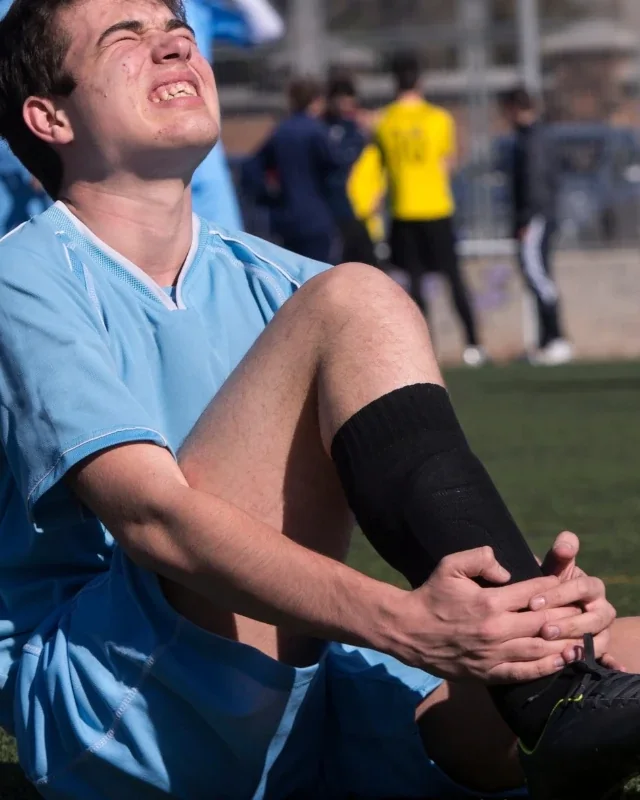
How physical therapy in San Antonio helps.
Sports rehab is judged on one thing, which is whether you get back and stay back. Your therapist establishes what the tissue can currently tolerate, what your sport will demand of it, and the honest gap between the two. Hands-on work and early loading keep the injured tissue moving rather than stiffening. Strength returns first, then power, then speed, then the chaotic parts of your sport: cutting, landing, contact, fatigue. We measure as we go and compare side to side instead of asking how it feels. In Texas you can start without a physician referral for up to 30 days of treatment, so a Saturday injury does not have to wait on somebody else's appointment book first.
What to expect from your recovery.
The injury and the demands of your sport
We establish what is injured and how irritable it is, then map what your sport asks of you: the positions, the speeds, the contact, the volume in a normal training week. Those two pictures set the plan and a realistic timeline. Your therapist tells you at the evaluation what recovery looks like for your specific injury rather than handing you a generic number.
Loading the tissue while it heals
Protection is short and loading starts early, because tissue that is never challenged heals weak. Manual therapy and controlled movement restore range, and strength work begins in whatever positions the injury tolerates. Blood flow restriction lets us build strength when heavy load is not safe yet. Sessions run 30 to 60 minutes, one on one, usually 2 to 3 times a week.
Return to sport on evidence, not on feel
The last phase looks like training rather than treatment. We rebuild power and change of direction, expose you to speed and fatigue, and rehearse the exact movement that injured you until it is boring. Clearance rests on strength measured side to side and control under load. You leave with the maintenance work that keeps this from becoming a recurring injury.
I am very pleased with the results of my rehabilitation at Liberty, I walked in barely able to hold my camera equipment without pain, and now I am without the pain.
Pain rarely travels alone.
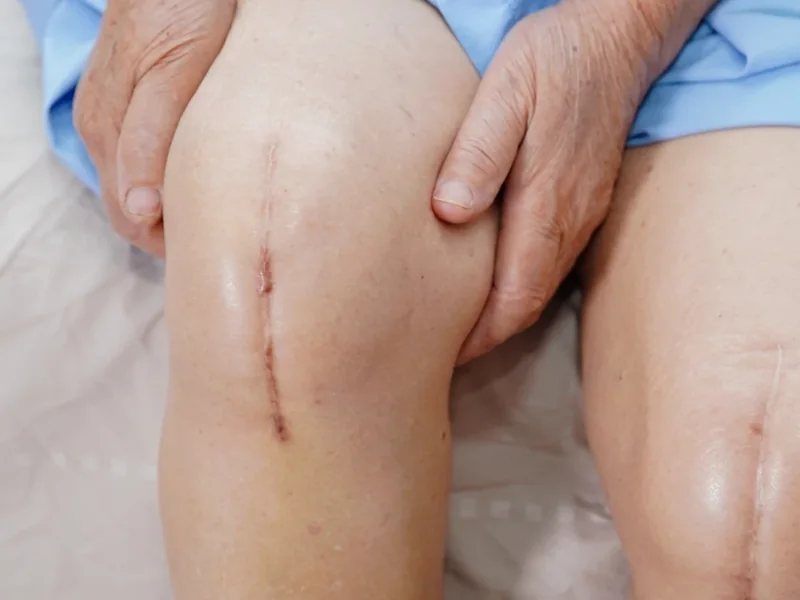
Knee Replacement Surgery
Regain the motion and quadriceps strength that decide how well a knee replacement goes.
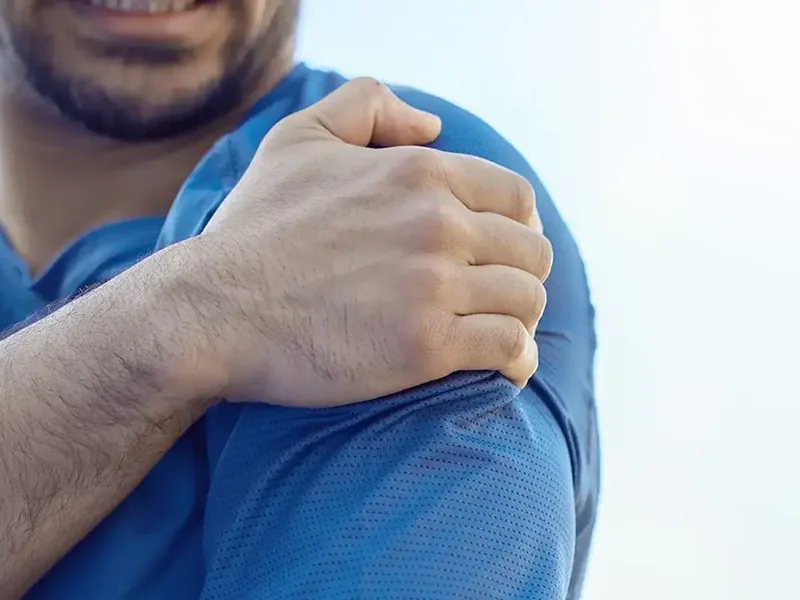
Shoulder Pain
Frozen shoulder, impingement and overhead pain: mobility first, then strength that holds.
Balance & Gait Disorders
An ankle sprain costs you balance as well as ligament. Retraining it is what stops the next roll.