Parkinson’s Wellness Recovery in San Antonio
Your steps got shorter without you ever deciding they should. Buttons take longer. Getting out of a chair has become something you plan for. This program trains the size of your movement back up, on purpose, one on one.

What is Parkinson’s Wellness Recovery?
Parkinson’s Wellness Recovery is exercise with one job: making your movement big again. Parkinson’s disease shrinks movement before it takes anything else away. The stride shortens. The arm stops swinging. Turning becomes a series of small careful steps instead of one motion. None of that arrives on a day you can name. This program works in the opposite direction, and four things separate it from a general fitness class. Large amplitude movements, big and intentional, push back against stiffness and slowness. High effort exercise challenges your strength and endurance instead of protecting you from them. Multi posture training rehearses the same skills sitting, standing and moving between the two, because real life does not happen in one position. Functional building blocks mirror what your day is actually made of: walking, reaching, turning, and rising from a chair. Your licensed therapist scales every one of them to your current abilities and your current symptoms, which is why the program suits any stage of Parkinson’s rather than only the beginning. Sessions run 30 to 60 minutes, one on one, with the same therapist each visit, so the person who set your baseline is the person who sees it change.
This is one part of how we approach the condition. The wider picture is on our Parkinson’s page, and depending on what your evaluation shows, the plan may also draw on balance therapy or neurological rehab. You also do not need a physician referral to begin. Texas direct access allows up to 30 days of physical therapy without one, so starting does not have to wait on somebody else’s calendar.
Who it's for.
This program is not reserved for one stage or one severity. Exercises are scaled to what you can do today and progressed from there. These are the people who start it.
Recently diagnosed
The diagnosis is new, you still move well, and most of the advice you have been handed amounts to stay active. This is what staying active looks like when it is built for Parkinson’s specifically: large amplitude, high effort, and progressed on purpose rather than left to chance. Starting while your movement is still good means you are training the habit of size and effort, not trying to win it back later.
Movement has quietly gotten smaller
Your handwriting shrank. Your voice dropped. The stride shortened and the arm swing went away, and none of it announced itself. Large amplitude training answers that pattern directly, because it rehearses movement at a scale that feels exaggerated to you and reads as ordinary to everyone else. We measure where you are now, then build the size back through walking, reaching, turning and standing up.
Balance is the concern now
Turning in the kitchen has become a careful operation. You reach for the furniture without thinking about it. Perhaps there has already been a fall. Multi posture training and functional building blocks target exactly that, rehearsing the transitions where balance is most often lost: sitting to standing, turning, changing direction, and stepping over a threshold. The aim is steadier movement and more confidence in it.
What to expect.
Every session is one on one with your therapist, and every exercise is scaled to what you bring through the door that day. Here is how the program runs.
Evaluation and baseline
Your first visit measures how you move right now: stride length, arm swing, posture, balance, how you rise from a chair and how you turn. Your therapist asks what has changed and which of those changes matters most to you. That becomes your baseline, and the plan is built from it rather than from a template.
Big, high effort training
Sessions run 30 to 60 minutes and are genuinely demanding. You practice oversized versions of ordinary movements, sitting, standing and in transition, with your therapist cueing amplitude and effort the whole way through. Most people come 2 to 3 times a week. Exercises change the moment they get too easy or too hard.
Home practice and carryover
Amplitude fades when it is not rehearsed, so you leave with a short home program you will actually do and the cues that make it work. Your therapist reviews it every visit and adjusts as you change. The point is that the size and effort you practice here follow you into the kitchen, the driveway and the grocery aisle.
Wear clothes and shoes you can move in, and bring the person who helps you day to day if you would like them to learn the cues. We are in network with roughly 45 plans and verify your benefits before your first visit, so you know your coverage in advance.
On my very first visit, I was greeted and made to feel welcome. The staff was very friendly and professional which eased my concerns almost immediately.
Where to go next.
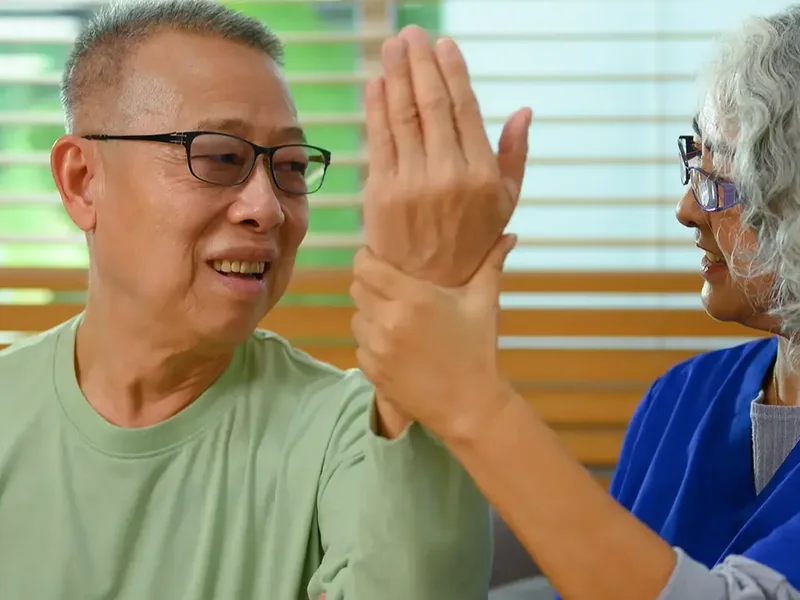
Parkinson’s
The condition itself, and everything we use against it beyond this one program.
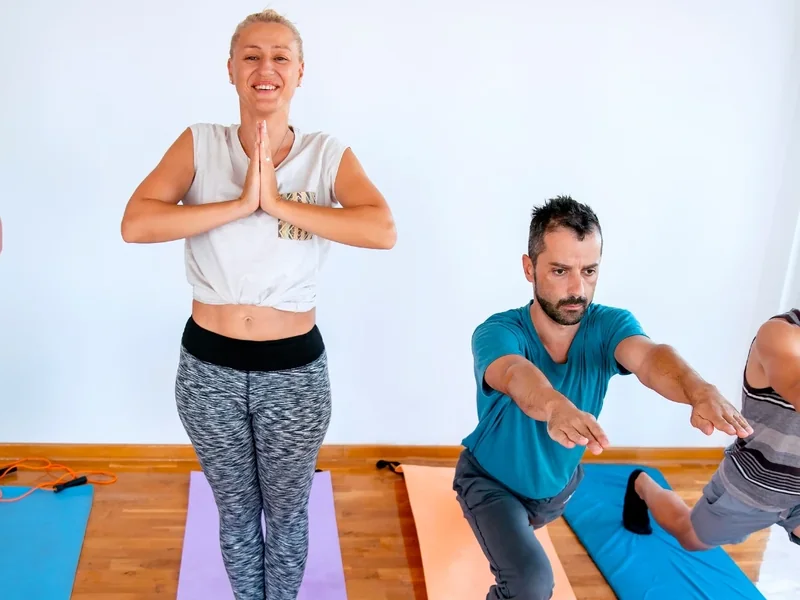
Balance Therapy
Steadier walking and fewer near misses, through graded balance and strength work.

Neurological Rehab
Retraining movement when the nervous system, not the joint, is what changed.