Parkinson's Disease in San Antonio
The steps got shorter without you ever deciding they would. Turning in your own kitchen takes thought now, and you have started scanning every room for something to hold on to.
What causes Parkinson's symptoms?
Parkinson's affects the part of the brain that automates movement. Things your body used to handle without being asked, like swinging an arm, taking a full step, or turning without planning it first, now need your attention. Medication addresses the chemistry. It does not retrain the movement itself. That part responds to specific, effortful, repeated practice, which is exactly what therapy is built to deliver.
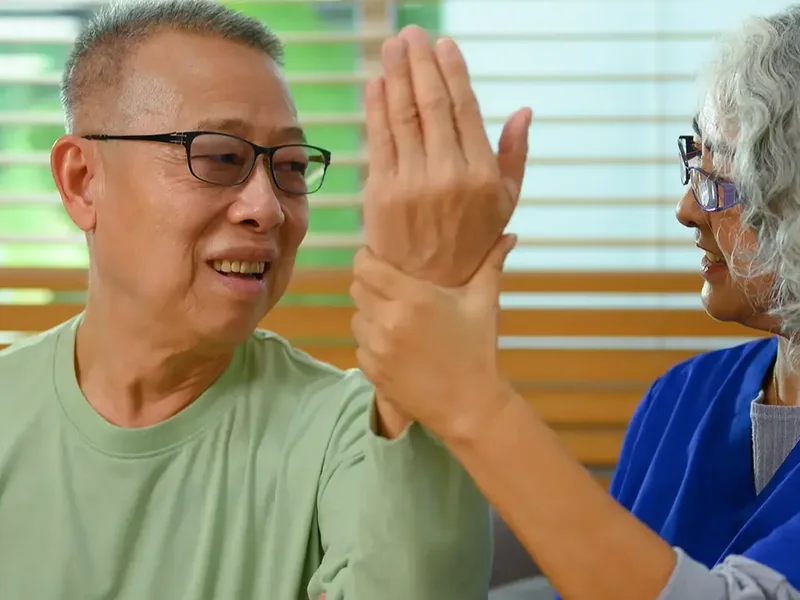
Parkinson's develops when neurons in a small region of the brain that produce dopamine gradually decline. Dopamine is what lets movement run on autopilot, at the right size and the right speed, without you supervising it. As the supply falls, movement shrinks and slows. Steps shorten, handwriting gets smaller, the arm stops swinging. The signal still reaches the muscle, but it arrives undersized, which is why deliberately practising bigger and faster movement works as well as it does.
Slowness and smallness of movement is the defining feature, and it is deceptive because your internal sense of effort recalibrates along with it. A step that feels perfectly normal to you can look visibly short to anyone watching. Buttoning a shirt, rolling over in bed, and rising from a chair all take longer and cost more. Training that forces large amplitude movement resets that internal gauge so ordinary sized movement stops feeling excessive.
Stiffness through the trunk and limbs pulls posture forward and takes rotation out of the spine. Once the trunk stops rotating, arm swing disappears, turning becomes a series of small shuffling steps, and reaching behind you or checking a blind spot in the car gets genuinely difficult. Hands-on work and flexibility training give the range back, and then movement training teaches you to actually use the range you just recovered.
Freezing is the sudden sense that your feet are glued down, usually at doorways, in turns, in crowds, or in the moment you set off. It happens because the automatic rhythm driving your stepping falters and nothing steps in to replace it. External cues can replace it: a beat to step to, a line on the floor, a counted rhythm, a deliberate weight shift. These are learnable strategies, and rehearsing them before you need them is what makes them available when you do.
Postural reflexes, the automatic catches that save you when you trip, slow down with Parkinson's. Add a forward lean, shorter steps, and less ankle strategy, and a small stumble becomes a fall. Falls are the single biggest threat to independence, and they are also the most trainable. Balance work that challenges you on purpose in a controlled setting, including reactive stepping, turning, and walking while doing something else, is the direct answer.
The most common accelerator of decline is simply doing less. Less movement means weaker muscles, tighter joints, poorer endurance, and more fear, and every one of those makes the next month harder than it needed to be. Therapy is not a last resort for when walking gets difficult. It is most useful while there is still movement to protect. Texas direct access lets you begin physical therapy for up to 30 days without a physician referral, so you can start before your next neurology appointment.
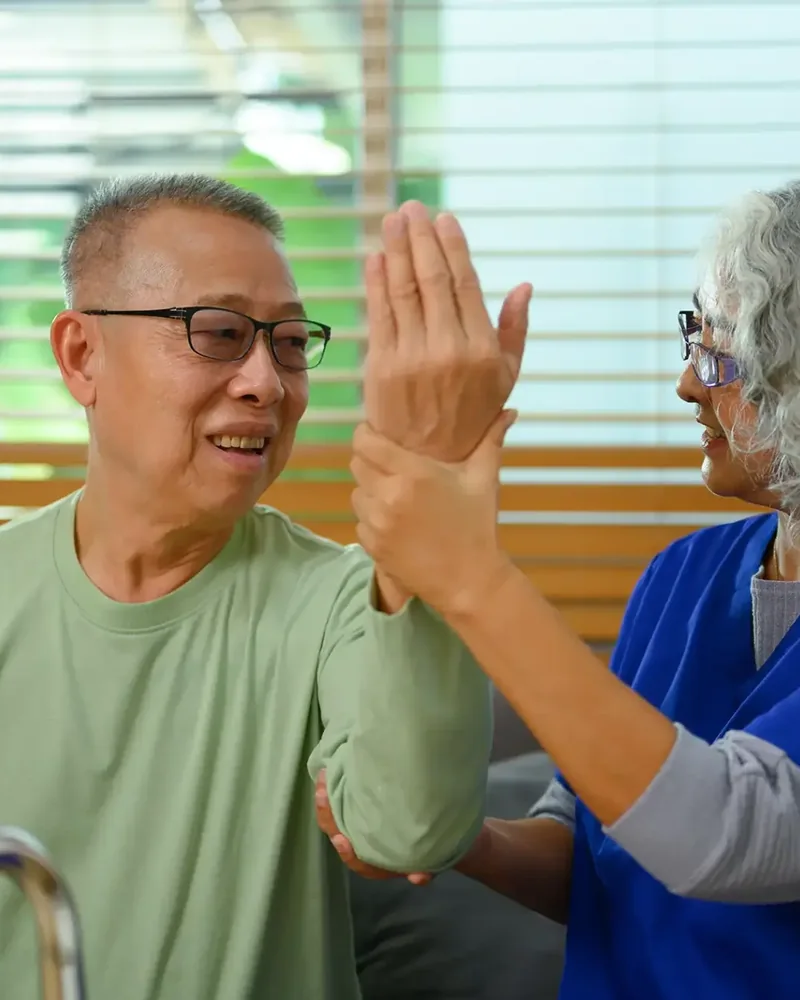
How physical therapy in San Antonio helps.
Movement in Parkinson's responds to practice that is specific, effortful, and repeated, so that is what your sessions look like. We train large amplitude movement to reset a sense of effort that has quietly recalibrated downward. We use external cueing, rhythm, targets, and counted patterns so your stepping has something to lock onto when the automatic rhythm falters. We restore trunk rotation and flexibility so turning stops costing you a handful of small shuffling steps. We build the strength that standing up and climbing stairs demand, and we challenge balance under supervision so your reactions get rehearsed before you need them. Sessions run 30 to 60 minutes, one on one with the same licensed therapist each visit.
What to expect from your recovery.
Evaluation and a movement baseline
We watch how you walk, turn, rise from a chair, and hold your balance when something unexpected happens. We check trunk rotation, posture, strength, and exactly where freezing shows up in your day. You leave with a clear picture of which parts of your movement have changed most and which of them respond fastest to training.
Amplitude, cueing, and balance training
Sessions are active. We train bigger, faster movement against your own recalibrated sense of effort, add external cues for stepping and turning, restore rotation through the trunk, and challenge balance in a setting where a stumble is safe. Strength work for sit to stand, stairs, and endurance runs alongside all of it.
Carrying it into your week
Skills only count if they show up at home. We rehearse the specific situations that catch you: your doorways, your hallway, getting in and out of the car, the shower. You leave with a home program and cueing strategies you can run yourself, and family or caregivers are welcome in sessions so everyone uses the same language.
My second time there in a year Dr Lugo knows here trade and helpful to allow me to function i.e. cooking gardening driving and sleeping well Liberty Professional & Support Staff is beyond reporch….
Pain rarely travels alone.
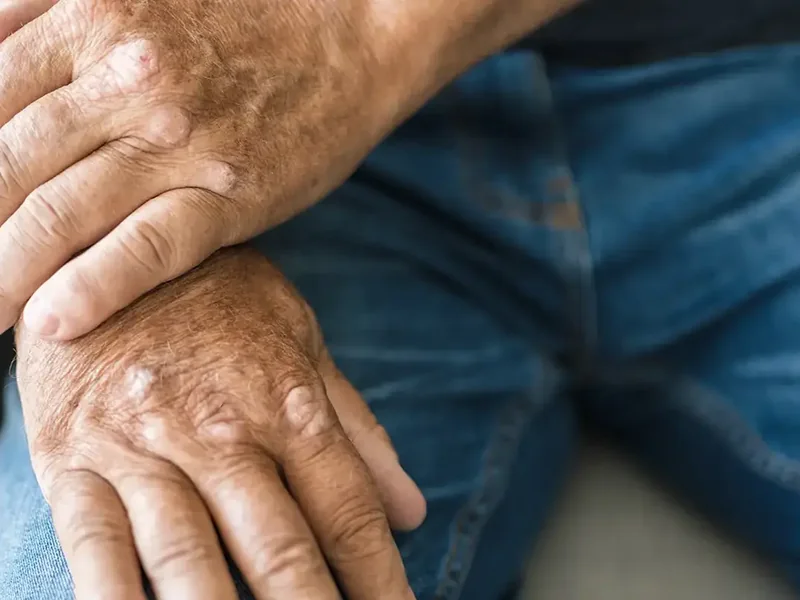
Arthritis
Rigidity often sits on top of ordinary joint wear. We treat the joint and the movement pattern together.
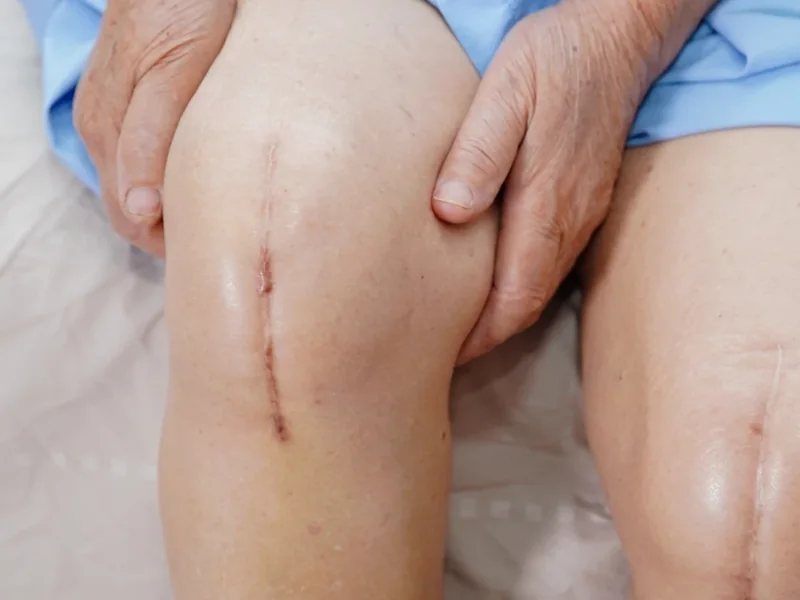
Knee Replacement Surgery
Joint surgery alongside a movement disorder needs rehab built around balance and gait, not a standard protocol.
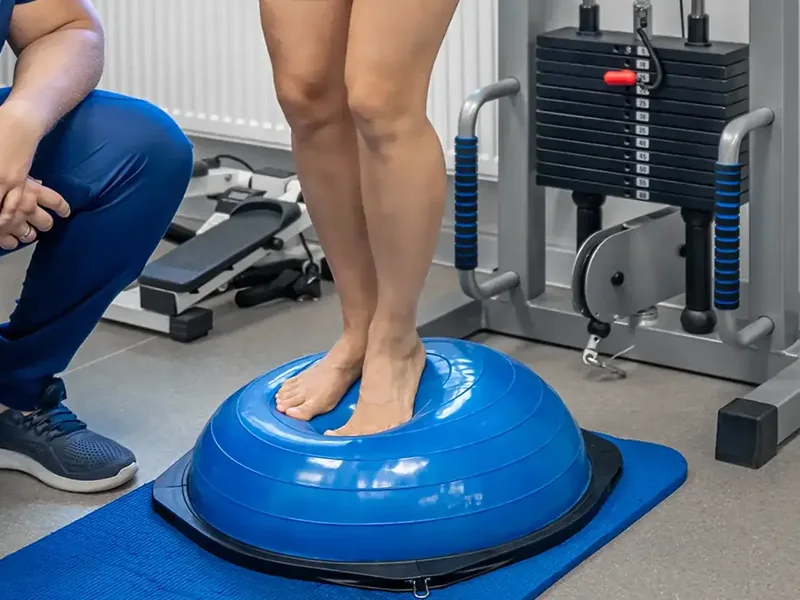
Balance & Gait Disorders
Unsteady walking and fall risk are treatable. We rebuild the system that keeps you upright.