Dizziness & Vertigo Treatment in San Antonio
Rolling over in bed sets the room spinning. You have learned to turn your head slowly, sit up in stages, and keep one hand on the wall. That is a lot of quiet management for something that usually has a treatable cause.
What causes dizziness and vertigo?
Your sense of balance runs on agreement. The inner ear, the eyes, and the position sensors in your neck and joints all report to the brain, and while their reports match you feel nothing at all. Dizziness is what disagreement feels like. Which structure is filing the wrong report decides everything about treatment, because the manoeuvre that clears one cause does nothing for another. That is why a first visit here is mostly testing.

Tiny calcium crystals sit in one chamber of your inner ear and are not meant to travel. When they break loose and drift into a balance canal, ordinary movement sends a violent false signal that you are spinning. Rolling over in bed, tipping your head back at the sink, or bending to a low shelf sets it off, and it usually settles within a minute. This is the most common cause of true vertigo, identified by position testing and treated with repositioning.
A virus can inflame the nerve carrying balance information from the inner ear to the brain. The onset is often dramatic: severe vertigo, nausea, and eyes that will not settle, lasting hours to days. The acute phase resolves on its own, but the brain then has to recalibrate around an ear that no longer reports equally with the other side. Without guided movement during that window, many people compensate badly and carry lingering unsteadiness for months.
Meniere's involves fluid pressure changes in the inner ear and brings episodes of vertigo alongside hearing changes, ringing, and a feeling of fullness in the ear. It is managed medically, and the diagnosis belongs with your physician or an ENT. Therapy has a defined role beside that care: rebuilding steadiness between episodes, reversing the deconditioning that unpredictable attacks cause, and giving you a plan for staying safe on your feet when one arrives.
Dizziness can be a migraine event with no headache attached at all. The nervous system runs hypersensitive, and busy visual environments like a grocery aisle, oncoming traffic, or a scrolling screen can set off a spell lasting minutes to days. Motion sensitivity and light sensitivity usually travel with it. Treatment pairs trigger identification with graded vestibular work that slowly raises your tolerance, rather than shrinking your life around everything that provokes it.
The joints and muscles of your upper neck feed constant position information to the same part of the brain that handles balance. When the neck is stiff, injured, or holding tension, those signals conflict with what the inner ear is reporting. The result is dizziness tied to turning your head or holding a position, usually with neck pain or a headache alongside it. Restoring neck mobility and settling the muscles often takes the dizziness with it.
A head injury can disrupt the vestibular system, the way your eyes track and coordinate, and the brain's ability to filter all of that at once. Dizziness that lingers afterwards is common, and so is exhaustion in visually busy places. Recovery is not simply waiting it out. It is structured retraining that reintroduces the movements and environments that provoke symptoms, in doses small enough to build tolerance instead of setting you back.

How physical therapy in San Antonio helps.
Vestibular therapy is precise work. If testing points to displaced crystals, repositioning manoeuvres move them back where they belong, and relief can come quickly once the affected canal is identified. If an ear is under-reporting after neuritis, graded exercises teach your brain to recalibrate around the information it still receives. If the neck is driving it, the neck gets treated. The common thread is controlled exposure to the movements that provoke you, dosed at a level you can handle and built up from there, until your brain stops reading them as a threat.
The other half of the work is undoing the habits dizziness builds. Most people arrive holding their head still, avoiding particular turns, and moving so carefully that the balance system never gets the input it needs to recalibrate. Part of the plan is returning that movement rather than teaching you to live smaller. In Texas you can start without a physician referral for up to 30 days. Sessions run 30 to 60 minutes, one on one, with the same therapist each visit, and most people notice a change within the first two to three weeks.
What to expect from your recovery.
Testing until the cause has a name
Your first visit is mostly assessment. We watch your eye movements, place your head in the positions that provoke symptoms, check how your neck moves, and test your balance and walking. Naming the cause is what separates a fast recovery from months of guesswork, so treatment waits until the testing points somewhere specific.
Treating that cause directly
Treatment follows the finding: repositioning for displaced crystals, graded habituation for an ear that is under-reporting, hands on work when the neck is driving it. Symptoms can rise briefly during the exercises that provoke you, which is expected and dosed on purpose. Most people notice a change within the first two to three weeks.
Getting your head moving again
The last phase rebuilds tolerance for real settings: turning quickly to check traffic, looking up on a ladder, walking a busy store aisle, driving without bracing. A typical course is two to three visits a week for four to six weeks. You leave with a home programme and clear instructions for what to do if symptoms return.
I opted to go to Liberty Rehabilitation Specialists-Northeast in preparation for upcoming surgery. The staff at Liberty are great! Excellent customer service from the administrative team!
Pain rarely travels alone.
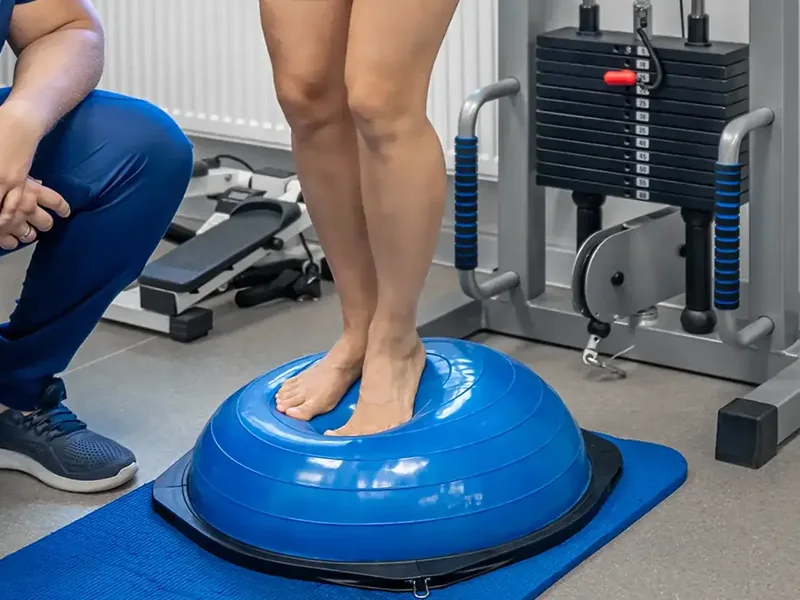
Balance & Gait Disorders
Dizziness and balance loss often go hand in hand. We treat the vestibular system and the strength behind it.

Headaches
Dizziness and migraines often appear together. Treating one often helps the other.

Arthritis
Vestibular dysfunction can trigger pain cycles. We address both the dizziness and compensation patterns.